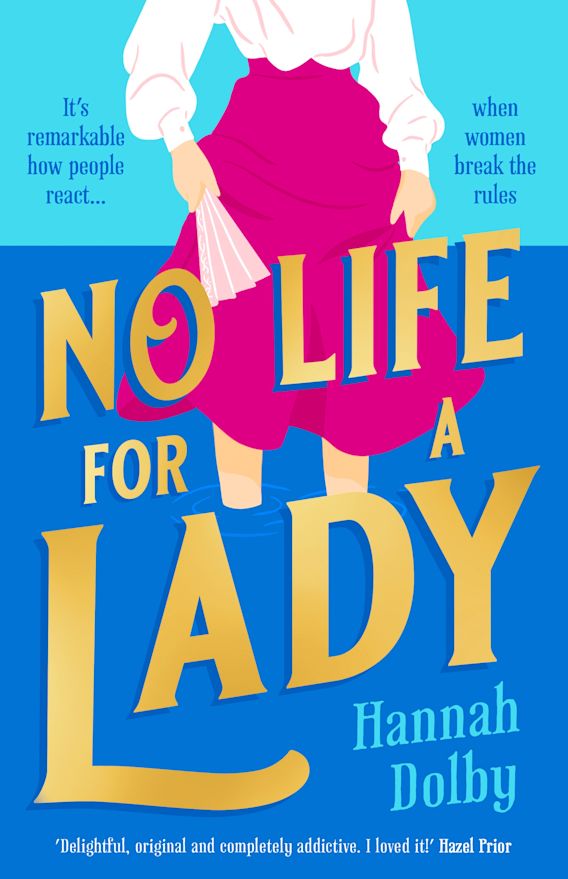
Book Review: No Life for a Lady by Hannah Dolby – a light and humorous adventure

This novel was a breath of fresh air, a lively read that was a welcome pick-me-up without challenging the brain cells too much. Part rom-com, part mystery with a little comedy of manners thrown in, No Life for a Lady follows Violet Hamilton who lives with her father in the English seaside town of Hastings.

We’re in the final years of the 19th century, and at 28, Violet should be happily married off by now, according to her respectable banker dad. But Violet is determined never to marry, her parents own marriage having been somewhat less than blissful. So much so that a decade ago, Violet’s beautiful mother Lily disappeared. She’d just popped out to visit friends one evening and never returned.

Lily’s disappearance might have been an accidental drowning as she was last seen on the pier. Had she fallen into the sea and been washed away? That certainly seems to be a possible theory and the one Mr Hamilton propounds to Violet, all the better for her to put her mother behind her and move on with her life. But Violet feels she would know if her mother had died, and thinks she could be out there somewhere, maybe even needing help.

When Violet decides to hire a detective, she sets in motion a chain of unforeseen events that spell disaster on one hand, but also push Violet to becoming a sleuth herself. Frank Knight is the only detective in town and eagerly takes on her case. But Violet is unimpressed with his lack of professionalism, and his assumptions about Lily seem set to defame her rather than save her.

The disappointments of the decade had been compounded by the realisation it was almost impossible for a lady to take up a respectable profession. I had been set on the idea, but now my attic was filled with the skeletons of half-finished hats, faded botanical specimens and, most tragic of all, dusty portraits of a few worthy occupants of the town. This last career had ended abruptly when I persuaded the wife of the town mayor to pose for a portrait. I had faithfully included all three of her chins, upon which she told me she had only sat for me out of sympathy, forbade me to continue as an artist and left, chins wobbling in fury.

Violet finds an old newspaper which leads her to Benjamin Blackthorn, a reluctant detective who has given up the trade in favour of selling furniture in the old, slightly seedy part of town. While he is the opposite of Knight in every way, Benjamin refuses to take on her case, but Violet wears him down enough to allow her to help with one or two cases that require a woman’s touch. Violet is more enthusiastic than subtle at the outset, which leads to some hilarious confrontations.

Dolby’s manuscript for the book was the runner-up in the Comedy Women in Print awards, and there are plenty of fun scenes, the writing’s witty, but there’s plenty to think about too. There are issues around the constraints placed on women in the era, of class and the lack of choice when it comes to making a living: marriage, servitude or prostitution seem to be the main options for women. Add to that the resigned tedium of being stuck in an unhappy marriage; the ignominy of divorce.

Packed with an assortment of quaint and humorous characters, the story builds to a dramatic conclusion involving surprising revelations and a fair amount of danger. For a young lady of her time, Violet has to step outside the norm of proper behaviour but finds allies in surprising places. The ending leaves us with possibilities for a sequel, perhaps more cases for Violet to solve. I shall certainly be keen to read more of Violet’s adventures. No Life for a Lady gets four out of five stars from me.

Book Review: The Missing Years by Lexie Elliott – a superbly atmospheric psychological thriller

I was drawn to this novel by by the setting. Not only the rural Scottish village but the creepy old house, a large manse that dates back centuries and a history including blood-thirsty reprisals during the Jacobite rebellion. It’s bound to be haunted, and yes the opening sentence of Chapter One is ‘The Manse is watching me.’

The narrator of the story is Aisla Calder who has taken a break from her high-powered job based in London as a television news producer, following the death of her mother. She’s been left an old house in her mother’s will, but she is unable to sell it because the Manse is co-owned by Martin Calder, her father, who walked out on his family when Aisla was a child. He hasn’t been seen since and nobody knows if he is dead or alive. Also missing is the packet of diamonds he was carrying for the company he worked for. It’s all very suspicious.

Each chapter begins with an imaginary account of where he might have got to, while Aisla sets in motion the legal proceedings to prove that he’s dead. After living in the Manse a short time, she’s somewhat reluctant to stay. Thank goodness her sister Carrie has agreed to come to keep her company while she sorts things out. Carrie is a bright young actress in a play a commuter train’s ride away in Edinburgh, but there is a strain between them. Carrie can’t quite forgive Aisla for not being around as she grew up, not coming to see her on stage.

It’s bad enough having to deal with all the family stuff, the loss of a mother who was a terrific artist, but not at all loving, of an unsupportive relationship with a top TV news reporter, and having to negotiate the tricky waters of living with her sister. But there’s creepy stuff happening at the Manse too. Her neighbour, friendly Jamie drops in unannounced to explain about his weird sister, Fiona, who has a fascination with the place. It’s best she has her locks changed.

I want to feel that I am me, created from pure air, my genes unsullied by ancestry. I want to feel that my thoughts and reactions and decisions are mine and mine alone. But being here, in Scotland, in the Manse of all places, has me feeling the weight of my DNA, of the history and memories and behavioural patterns it carries. Of the impact it has had, or might yet have, on what I think of as me.

Aisla finds in the attic some old photos from before Aisla was born showing Jamie’s parents and her own – obviously friends. But what are those aerial maps all about? And then there are hostile locals to deal with – openly abusive old Morag – and nasty things left on the doorstep. The house doesn’t seem to like Aisla much either – the heating turns itself off, the smoke alarm goes in the middle of the night and the bathroom door keeps banging. Aisla was sure she’d closed the window.

An intelligent woman in her thirties, Aisla should be able to deal with a lot of this stuff rationally. But she’s always so tired and the emotional events of recent weeks have taken a toll. This all adds to the tension as things get more and more worrisome. She’s made friends with other locals, the handsome Ben who’s a bit of a player among them, and talks to Jamie’s father who was the policeman who investigated Martin Calder’s disappearance. If only Carrie hadn’t become so chummy with weird Fiona. It’s as if there’s no one she can really trust and as a reader you can’t help wondering which if them is plotting against Aisla. Elliott instills a nice undercurrent of menace.

It all builds to a dramatic, nail-biting showdown with the malefactor, the house creating an eerie backdrop, to say nothing of the Scottish weather. The Missing Years is a satisfying story, a brilliant psychological thriller, a breezy, engaging read that’s also nicely written. It’s sure to please fans of Ruth Ware and Clare Mackintosh. I’m keen to read more by Lexie Elliott – it’s hard to resist a title like How to Kill Your Best Friend. This novel gets four out of five stars from me.
Book Review: The Night She Disappeared by Lisa Jewell – another stylish psychological thriller from an always-reliable author

I often pick up a Lisa Jewell novel when I want a light, engrossing read. The Night She Disappeared is one of those books where the rich girl from a loveless family makes friends with the much loved poor girl with problems – and disaster ensues.

Tallulah lives in a village with her divorced mother and brother and is doing fine until an unplanned pregnancy has her reconsidering her options. She’s barely out of school so enrols at the nearest polytechnic, a bus ride away and organises her life around her baby. She didn’t plan on living with her boyfriend, Zach, but he is insistent he wants to get back together and she unbends and lets him move in with her at her Mum’s home. Mother, Kim is delighted as she sees in Zach someone who adores her daughter and will be a good father.

But Tallulah meets Scarlett at the bus stop – glamorous, dangerous looking Scarlett, who is at the same college, doing art to Tallulah’s social work course and the two become unlikely friends. Scarlett lives at Dark Place, a large house across the woods that has a dark history, but has had lavish amounts spent on it. As the weeks and months roll by, Tallulah compartmentalises her life between college, home life with her family and Zach, and secret meetings with Scarlett.

The story flips between Tallulah’s story and a year or so later when Sophie moves into the village with her partner Shaun. He’s the new head teacher at Maypole, a private school a mere woodland stroll from Dark Place, where Tallulah and Zach were at a party they night they disappeared. Sophie is an author of cosy mysteries, but here she’s suddenly aware of an unsolved mystery right on her doorstep.

When Sophie finds a sign saying “Dig here” and an arrow, she can’t help herself. What she finds soon draws her into Tallulah’s story, as well as meeting Kim working the bar at the local pub, a woman she wants to help. But in the background there’s her own relationship to consider. Shaun is obviously stressed. He has only chosen the job at Maypole to help fund the expensive schooling his ex-wife has insisted on for their daughters. And he and Sophie have never lived together before. They used to enjoy London so much too. Raking up what happened on the school’s doorstep isn’t going to help Shaun settle in to his new job.

Meanwhile Kim is battling away, trying to manage the baby as well as keeping alive her hope for Tallulah’s return. There are a bunch of minor characters who have a role in what happened and who could be suspects in the case. There’s a nice policeman who listens and does what he can. The story moves to an astonishing and gripping ending and I’d be amazed if you manage to put it all together before it’s all revealed. It might even give you goosebumps.

I am happy to say that The Night She Disappeared did its job; it’s a stylish, engaging, relaxing read. The main characters who tell their story are easy to empathise with, even if they do silly things or fail to stick up for themselves. And the plot is nicely measured out between them to keep you hooked. I’m not sure I enjoyed it as much as others I’ve read by Jewell, but it’s still an easy four out of five stars from me.
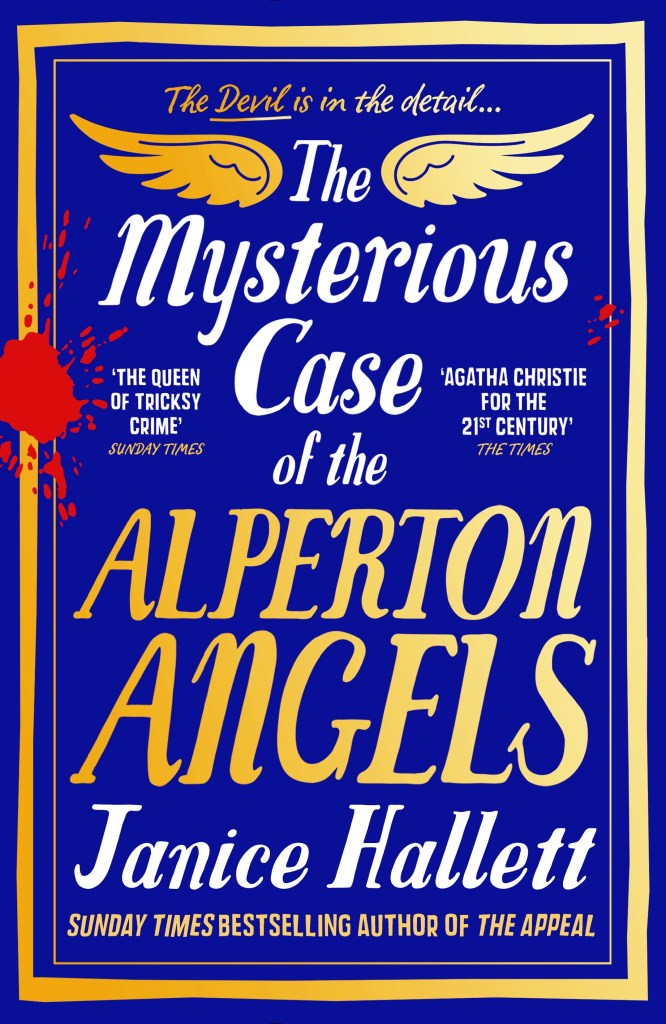
Book Review: The Mysterious Case of the Alperton Angels by Janice Hallett – another twisty mystery that will have you hoodwinked

I’m beginning to know what to expect every time I pick up a novel by Janice Hallett. First of all it will be told in an unusual format – often in emails and texts or transcriptions from recorded conversations. The other thing is that the story will have me totally hoodwinked. Normally, with mystery novels, I have a go at trying to solve the mystery from the clues presented, considering the characters and their motives, their histories. But for this novel, I didn’t bother trying, just went along for the ride.

The story begins with documents from a safe deposit box relating to the publication of a book. We follow Amanda Bailey, a journalist and writer of true-crime books, when she is commissioned to write a book on Alperton Angels. This was a cult lead by the self-titled Gabriel Angelis, now residing in prison for the murder of a waiter. Eighteen years ago, the cult ended in the deaths of several of its members, and the miraculous rescue of a baby, which the cult believed to be the Antichrist.

There is no doubt that Gabriel Angelis is an evil man, and that prison is the best place for him, in spite of his pleas that he did not kill anyone. But what he did do was lure vulnerable teenagers into his orbit, in this case Holly and Jonah, who survived the ritual bloodbath eighteen years ago, Holly saving the baby from sacrifice when the stars were apparently in alignment.

Eighteen years later, where is that baby now? That is going to be the main focus of Amanda’s book along with the whereabouts of Holly and Jonah and what they’ve made of their lives since. But a rival publishing company is also interested in the Angels, and have chosen Oliver Menzies to write another book on the case.

Oliver and Amanda were on the same journalism course twenty odd years ago, a course that Amanda left abruptly without qualifying. And when her publisher suggests that she and Oliver work together to begin with so that they can ensure their books cover different territory, Amanda is not a happy camper.

It’s not easy getting people to talk about what happened, but one thing that does come across is that Amanda is a consummate professional and slowly the facts slot into place. Oliver just bumbles along and the What’sApp banter between them adds plenty of entertainment. This is just as well as a book of emails and texts would soon pall if Hallett didn’t manage to make them lively. So too are the transcriptions typed up by Ellie Cooper for Amanda. Ellie is a kind of sounding board for Amanda’s discoveries and offers lots of good thoughts, plus her asides as she transcribes Amanda’s phone-recorded interviews are a hoot.

But it’s the plot that really has you hooked, packed with twists and turns, and beguiling little details that had the police stumped. What was the deal with that Mini Clubman that ran off the road and disappeared? And those weird newspaper adverts – what did they mean? Hallett really knows how to use red herrings. Towards the end of the book, you suddenly begin to realise what really happened, and start to join the dots and see connections. Suddenly the unbelieveable all begins to make perfect sense.

The Mysterious Case of the Alperton Angels is another diverting read from Hallett but it works best if, as a reader, you enjoy puzzles. We only get to know characters as they reveal themselves in their emails and texts – we don’t even know where they live, or even a lot about what they look like. But perhaps Hallett deliberately impedes the reader’s empathy for them because of how untrustworthy many of them are.

I think Agatha Christie would approve of Hallett’s style. How many times have I read Poirot remind Hastings not to take too much at face value. How you can never be sure that a witness isn’t lying. And it’s the same here. The Mysterious Case of the Alperton Angels is a modern take on the classic detective novel. I can only gaze on and admire its cleverness. But cleverness isn’t everything in a book and I like a bit more from my crime fiction; I like to feel something too. So its a three-and-a-half star read from me.

Book Review: The White Hare by Jane Johnson – a haunting country house mystery with a touch of magic

We’re back in Cornwall for another novel set in the 1950s and I was in my happy place listening to this as an audiobook. I often hunt out these evocative country house stories.

The White Hare begins with a family of three arriving to take on a run-down country house with the aim of turning it into a guest-house. Somewhere comfortably-off urbanites might sojourn for a change of pace and some gentle pampering. This is Magda’s idea. In her fifties, Magda is an imperious, demanding and determined woman who won’t take no for an answer.

Her daughter, Mila, passively just does what her mother tells her, hoping to build a home for her and young Janey. But although she has strong feelings, she keeps them in check, because she owes her mother her salvation. A chance for a new start, having been duped by a bigamous husband and left with a five-year-old daughter. Remember, it’s the mid 1950s, when a woman’s reputation was everything.

The house is of course a mess, but in the barn they also discover an unwelcome guest. Jack, the interloper, says he hadn’t meant to trespass; he was just exploring the nearby countryside and would soon be on his way. But Janey has warmed to Jack, and when Jack reveals he can fix their car, and is handy with a hammer and nails, he becomes the women’s saviour when they face one crisis after another.

The locals don’t take kindly to strangers. It is said the house is haunted and when Mila mentions seeing a white hare on the road the day they arrived, all sorts of strange legends start to emerge. Then there’s Jack. He and Mila soon warm to each other, but Jack seems to be harbouring secrets. There’s also a creepy vicar, but fortunately for Mila, friendship and support are on hand from a local healer and her artist girlfriend.

The story follows Magda and Mila’s rocky relationship as they struggle to bring the house into a reasonable state of repair ahead of a lavish New Year’s Eve party Magda hopes will entice acceptance from the locals. The folklore of the area won’t leave Mila alone, and there are odd discoveries that hint at a tragedy involving the previous owners of the house.

To make things even more creepy, Janey seems to have discovered a way of communicating with an otherworldly presence through her toy rabbit. The story builds to a dramatic ending where the real and unreal converge and the present reveals, and can finally bury, past wrongs. The characters of Magda, Mila and Janey are interestingly developed – there’s nothing like adversity to bring people together.

I loved the story – the perfect sort of audiobook, narrated brilliantly by Danielle Cohen – intriguing and full of mystery with a bit Cornish history thrown in. Listening to a book like this takes me back to those old fireside tales that begin with, ‘let me tell you a story’. If you like books by Katherine Webb and Kate Morton, you’re sure to enjoy The White Hare, a four star read from me.

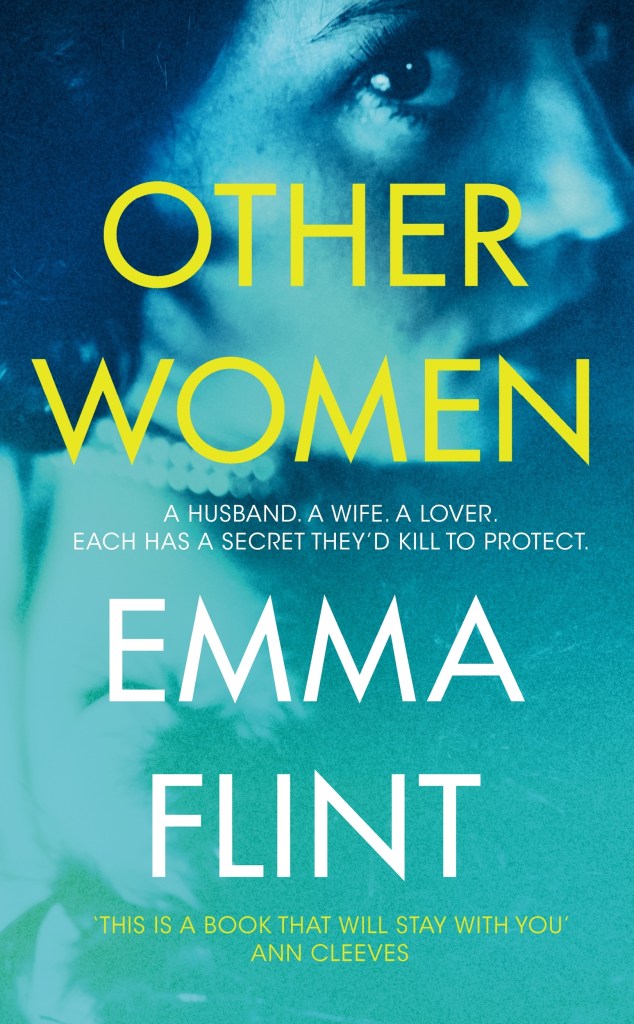
Book Review: Other Women by Emma Flint – a compelling crime story based on true events

I really had no idea what to expect from this novel when I picked it up – the description on the cover – “A husband, a wife, a lover. Each has a secret they’d kill to protect” is more beguiling than informative. Which is a bit of clever marketing probably. But it doesn’t really matter as I was soon caught up in the story which is told from the perspectives of two women.

First we have Bea, who is a working woman in the 1920s, living in a ladies’ club in Bloomsbury. She’s good at her office job and has worked her way up to have some responsibility. At thirty-seven, she feels she’s missed out on marriage and a family, but is happy with her life. She is independent and can afford to treat herself now and then. Her life is sharply compared with that of her somewhat self-satisfied sister Jane, who has married well and is a little sneering of her sister’s London lifestyle.

But at work, everything changes when a new salesman joins the team, the handsome and very charming Tom Ryan. The other girls gossip and flirt with Tom, while Bea keeps her head down and tries to ignore him. But she can’t deny the power of his personality. We follow the affair that develops, how Tom singles out Bea; their shared love of literature and self-improvement. Bea discovers another side to her that she’d mostly ignored, her capacity to love and be loved.

The story interweaves Bea’s story with that of Kate some months later as Kate deals with her husband’s arrest and the court case that follows. She is repeatedly questioned by the police about particular dates and the whereabouts of Tom, while trying to maintain a home for her daughter, and a veneer of respectability. She worries that her landlady will loose patience and they’ll be out on the streets.

I am his wife.
I am only his wife.
This is all I know how to say. To the policemen who come to the house, who take me to the police station, who ask me questions, I say over and over, ‘I don’t understand. I am only his wife.’
And they both look at me – the fat one with the moustache and the thin one with the coarse ginger hair – they look at me as though I am a child they are disappointed in.

Kate is also employed by Morley’s in the office, but at another branch. She needs her work to keep her small family afloat but how to do this with all the police activity, the newspaper interest. Kindly policeman, Inspector Wilde, is a quietly probing interrogator, patient and biding his time.

The court case that develops is based on true events. Emma Flint captures the fascination it engenders in the press and those who crowd onto the the public benches, the prejudices against the victim and the sympathy for the plaintiff. How the case unfolds is a brilliant piece of story-telling, particularly Kate’s role in the revelation of what happened, her feelings as a wife and mother balanced against her need to do the right thing.

Other Women is a haunting novel that brings to life the characters of two women who have been connected by a terrible event. It captures the post-war years and a time when Britain was still recovering from the tragic loss of a so many young men, and what this meant for women in the years following. The writing is exquisite – very atmospheric, evocative and empathetic.

As I began to read the early chapters, I wasn’t sure whether I was going to enjoy Other Women, but Emma Flint makes it all so compelling and believable and I know the novel will haunt me for days and weeks to come. Flint’s a master storyteller and writes with conviction and power. Her earlier book, Little Deaths picked up quite a few nominations for book prizes, and I imagine Other Women might well do the same. It gets four and a half stars from me.

Book Review: Good Riddance by Elinor Lipman – a witty New York comedy full of the unexpected

I’m often drawn to these sorts of New York comedies. I like the smart and snappy dialogue, the invigorating big city atmosphere – the apartments and the quirky characters who are always eating out or talking about eating out. I really enjoyed Elinor Lipman’s On Turpentine Lane, so was keen to snap this one up too. Both novels showcase this author as a writer of very original storylines.

In Good Riddance, the story follows Daphne Maritch, studying to be a chocolatier after a failed marriage and a recent move to a new apartment. It’s not long since her mother died, bequeathing Daphne, among other things, a 1968 Pickering High School yearbook. June Maritch was just a few years older than her students that year and had attended all the class of ’68 reunions, as well as annotating her yearbook with snarky comments about her former pupils.

Daphne doesn’t see any reason to keep the yearbook, and consigns it to the dumpster, where it is discovered by her neighbour, a budding documentary film maker. Geneva Wisenkorn sees all kinds of potential from interviewing the old classmates, showing them the yearbook and speculating about their teacher.

Suddenly Daphne rethinks her hasty ditching of the evidence. She doesn’t want her mother seen in a poor light and doesn’t trust her neighbour not to make her family look ridiculous. Her father was for many years principal at Pickering after all. Throw in a politician with a scandalous secret that also affects Daphne and suddenly she’s feels desperate to shut down the doco and reclaim the yearbook.

There’s a romantic twist to the story in the form of Jeremy, the young actor across the hall, who becomes Daphne’s co-conspirator. And things are complicated by Daphne’s father moving to New York. He plans to see a bit of life in the city he’s always dreamt of. When her dad takes on a dog-walking job, he has a chance to meet all kinds of women.

Lipman throws in loads of fun situations, including Daphne’s tagging along with Geneva to a reunion, a wedding, a funeral and a dramatic situation requiring Daphne to administer first aid. There’s a load of humorous dialogue and the characters butt heads and wind each other up spectacularly. It’s a fun read all round, but I have to say Daphne isn’t for me a particularly appealing character. She can be rather shouty and shrill. Maybe she needs more chocolate.

But on the whole, Good Riddance is an amusing read and Lipman’s writing crackles on the page. I whizzed through the book and will certainly read more by this author. Good Riddance is a three star read from me.

Book Review: The Last Party by Clare Mackintosh – a new promising new detective series in a moody North Wales setting

I saw Clare Mackintosh’s name connected with fellow suspense/mystery author Lisa Jewell, and being a fan of Jewell, decided she should be worth a shot. Like Jewell, Mackintosh has written a bunch of twisty mysteries, but The Last Party is the first in a series featuring Welsh detective Ffion Morgan. I like being in at the start of a promising crime series, and was soon glad I’d picked this up.

The mystery starts with the discovery of a dead body by swimmers braving a New Year’s dip. We’re in the remote village of Cwm Coed on the shore of a lake which borders England. Across the water is a luxury resort called The Shore, built by a couple of investors as holiday homes for the wealthy. These incomers don’t support the village shops, they zip around the lake on jet skies and are just generally obnoxious. So it isn’t surprising that the corpse turns out to be one of the investors, a Rhys Lloyd.

With a name like that you’d assume the victim’s Welsh. And he is – a local made good in the sense he’s become a successful star of stage and screen, and knows how to turn on the charm. His mother still owns the hardware store in the village, and it was his father’s land that he and his partner Jonny Charlton have turned into The Shore. Their New Year’s Eve party was supposed to bring everybody together and appease the villagers, but it all ends in murder. The story soon throws up a fair few suspects – it turns out Rhys is struggling to pay off creditors and his charm hides a darker persona.

DC Ffion Morgan is on the spot – she’s local, still living with her mother and sister in Cwm Coed, but for all that she’s something of a lone ranger. She drives an old Triumph at tearaway speeds over the winding rural roads and has a burning secret. She’s also shocked to discover that her one-night stand from the night before is the English cop assigned to assist on the case.

DC Leo Bradey is an intelligent and promising police officer from Cheshire, with a whole lot of baggage. His ex-wife is going out of her way to exclude Leo from being a parent to their young son, whom he adores, and his boss makes him the butt of all his tasteless jokes. Working with Ffion doesn’t get off to a great start either, but they slowly form a team. They soon discover that hardly anybody doesn’t have a motive for killing Rhys Lloyd.

The Last Party is a much better than average murder mystery. Clare Mackintosh is a former police officer herself so the story has a ring of authenticity. However, there’s a lot more than police work here. Family dynamics, old scores and the effects of burying damaging secrets all add to a character-driven, atmospheric read, the evocative setting adding a ton of interest.

As well as the dangers of the lake, there’s snow to contend with and the story builds to a life-and-death climax that has you on the edge of your seat. This is helped by a plot that switches back and forwards in time and between characters, mostly Leo and Ffion but also the key players and suspects. I was fair racing through the chapters to see what happened next. And then there are the twists.

For a diverting crime read, The Last Party doesn’t put a foot wrong and introduces a fabulous pair of detectives I’ll be happy to meet again. I’ll happily give it four stars. A Game of Lies, the next Ffion Morgan mystery, is due to be released later this year.

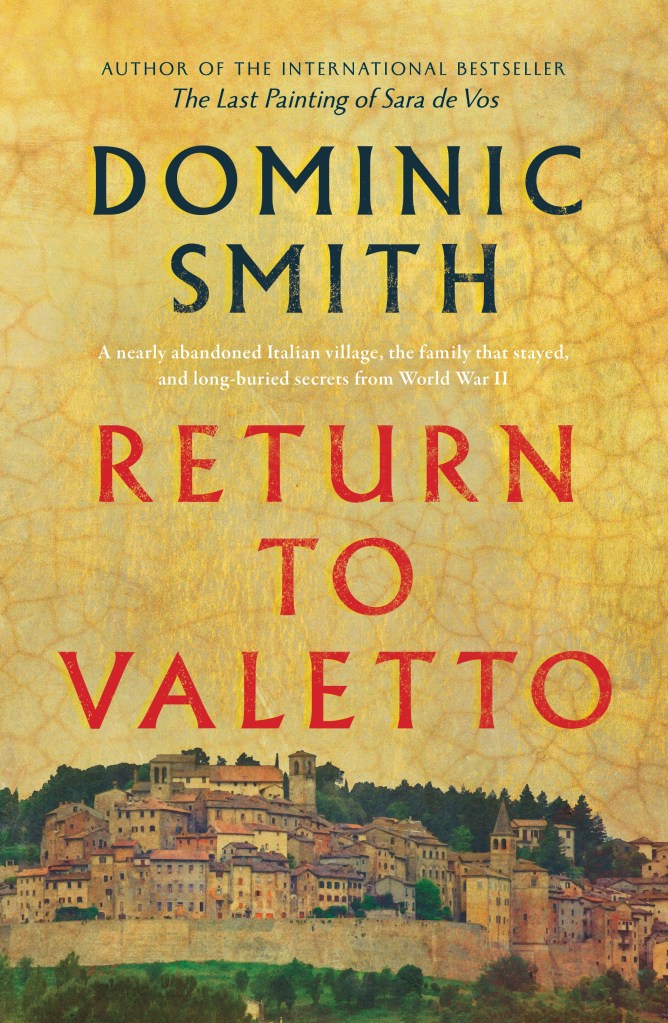
Book Review: Return to Valetto by Dominic Smith – back to Italy with a gorgeous evocation of place and atmosphere

Well, yes I know this book is about a lot more than its setting. There’s a man’s lingering grief for his late wife. A family of elderly women and a secret they never got to grips with from World War II. There’s some parent-child dynamics and a potential love affair. And all of it comes together in a captivating story that maybe takes a little while to get going, but once you get in, has you nicely hooked.

But when I look back on this book in months and maybe even years to come, I know it will be the setting that I’ll think about first. Valetto is Dominic Smith’s invented town in Umbria, which sits on a pedestal of volcanic rock. Much of the old town has fallen down into surrounding valleys, a 1971 earthquake urging many of its inhabitants to relocate. It has become a kind turreted and terracotta island, connected to the surrounding landscape by a footbridge.

Hugh is an American historian who specialises in the study of abandoned towns – there’s hundreds of them dotted around Italy and what better place to begin than Valetto, the childhood home of his mother and where even today his grandmother and three aunts still live. The Serafino women, all widows, are a big chunk of the population which has dwindled to just 10. In a few weeks it is to be his grandmother’s 100th birthday and a party has been planned.

A spanner in the works is the woman who has taken possession of Hugh’s cottage on the Serafino property, supposedly given to her mother for services rendered when Hugh’s grandfather, Aldo, was a resistance fighter during the war. Elissa Tomassi is adamant that the cottage is legally hers, just as Hugh’s aunts are convinced she’s a squatter with no legal tenure. Hugh is sure there can be a way to keep everyone happy and is caught in the middle. But he has to get to the bottom of what happened during the war and discovers not one but two family mysteries to solve.

The past will take Hugh back to Elissa’s home town in the north of Italy to find out what Aldo did in the closing years of the war. He’ll also discover a link between his mother and the Elissa’s that is a trickier memory to unlock and will reveal a crime that has been swept under the carpet. The story builds to a powerful and moving conclusion that has you glued to the final chapters as past deeds are dealt with.

What could be done with the wreckage of the past? As a historian I’d always believed that studying the past could reveal hidden meanings and patterns, that motifs lurked in the underbrush, but now I saw the neap tide of history washing up flotsam on an empty beach.

I enjoyed Return to Valetto enormously, not only for the setting which seems to be a big part of every scene. The late autumn mist across the valley that comes and goes and adds even more mystery. The large old villa that is the Serafino home with its cavernous rooms and crumbling frescoes. There’s the old family restaurant established by his grandmother, where you can see abandoned place settings and dusty menus from a night in 1971. (Oh, did I forget to mention this books is also a hymn to Italian regional cuisine?)

And the characters are a joy. The three aunts, each with their own peculiar ways and at times difficult interactions with each other. I have a particular fondness for books about aunts, going back to P G Wodehouse’s Bertie Wooster stories, and here Iris, Rose and Violet are brilliant. The grandmother with her iron determination to host an unforgettable birthday celebration with an ever-growing guest list and a despairing cook. Both Hugh and Elissa have daughters that make an appearance, so it’s an inter-generational tale as well.

I can’t help feeling Dominic Smith had a wonderful time researching and writing this book as his love for history, particularly social history, as well as all things Italian shines through. This is the second novel by this author I have read and recall that Bright and Distant Shores was one of my top reads for the year it came out. I’ve heard lots of good things about The Last Painting of Sarah de Vos as well. Return to Valetto gets the full five stars from me.

By the way, the fictional town of Valetto is inspired by Civita di Bagnoregio in Lazio – in case you want to visit, either in person or via the Internet.

Book Review: The Lincoln Highway by Amor Towles – the rocky road to adulthood in 1950s America

The latest novel from Amor Towles, author of A Gentleman in Moscow which I simply adored, is quite a different kind of book. Perhaps Towles needed a change from setting a novel almost entirely within the confines of a hotel – albeit a fairly grand one.

This time he’s taken us on a kind of road trip. And instead of a man of experience and taste as our main character, we’ve got several friends around eighteen years old, young men who met at Salina, a correctional facility for youth. It’s 1954 America – a conservative period full of opportunity. But these are lost boys, lacking parental love and guidance, having to overcome a misstep on their path to adulthood if they have a chance of making a life for themselves. We see them as they set out to do this in different and at times conflicting ways.

First up is Emmett, whose father died while he was away, leaving a farm in hock to the bank, awaiting a mortgagee sale. His younger brother, Billy, only eight, has been cared for by the neighbours, a farmer and his kindly, maternal daughter Sally. She has a soft spot for Emmett, but can only show this by cleaning the boys’ house and bringing them lovingly cooked meals. Otherwise, she’s usually giving Emmett a piece of her mind or stony silences.

After Emmett has been returned to his family home by the warden, Duchess and Woolly, two escapees from Salina, surprise Emmett, having stowed away in the trunk of the warden’s car. Duchess has been worried about sensitive, childlike Woolly, who has been struggling. So Duchess, an impulsive charmer, has taken matters into his own hands, seen an opportunity to save his friend, and get his hands on enough money to set them all up in life.

Sensible Emmett is appalled, having promised to take Billy to California in search of their mother and build a new life with the small stash of savings his father has left him. So many side-trips, diversions and interruptions hamper Emmett’s best of intentions and the four of them end up heading for New York one way or another.

Billy’s one consolation all the time he has been missing his mother, his brother’s time in Salina, his father’s passing and the loss of their home, has been a compendium of epic journeys by the heroes of literature – Achilles, Jason and Theseus for example – one for every letter of the alphabet. That and a handful of postcards written by the boys’ mother showing her progress west. And the best way to get there according to Billy is the Lincoln Highway.

I learned a lot of interesting things in this book. How to ride the empty cargo wagons on a freight train while avoiding being clocked by the guards. A trick with a cork and an empty wine bottle. How if you plan to stowaway in the trunk of a car, put teaspoon in your pocket so you can pop the lid when you want to get out.

The funny thing about a picture, thought Woolly, the funny thing about a picture is that while it knows everything that’s happened up until the moment it’s been taken, it knows absotively nothing about what will happen next. And yet, once the picture has been framed and hung on a wall, what you see when you look at it closely are all the things that were about to happen. All the un-things. The things that were unanticipated. And unintended. And unreversible.

Echoes of Billy’s compendium appear among the characters – not only the journey the boys take to New York, but in the helpful cargo train rider, Ulysses, who rescues Billy from a thief posing as a preacher. As you can see the novel has a picaresque quality about it, and that reminds you of stories like Don Quixote and Candide with the varied people the boys meet, the kind and the duplicitous, and the continued reversals of fortune.

And then you have the allusions to the tragic heroes like Macbeth who have a fatal flaw that can so easily lead them into disaster. Each of the boys has his own character fault that led him astray and on to Salina, and which they each must master if they want to avoid disaster. So the characters are affected not only by external events of fate or coincidence, but by those of their own making, their desires and needs.

There is so much going on in The Lincoln Highway I am sure I need to read it again to get the most of it. But again, Towles is such a delightful writer that every sentence is a joy. Situations that have the reader sighing an “Oh, no!” are nicely balanced with humorous ones and the story is paced and developed perfectly to its conclusion. I possibly didn’t like it quite as much as A Gentleman in Moscow, but it’s still a four and a half read from me, and I can’t wait to see what Towles comes up with next.