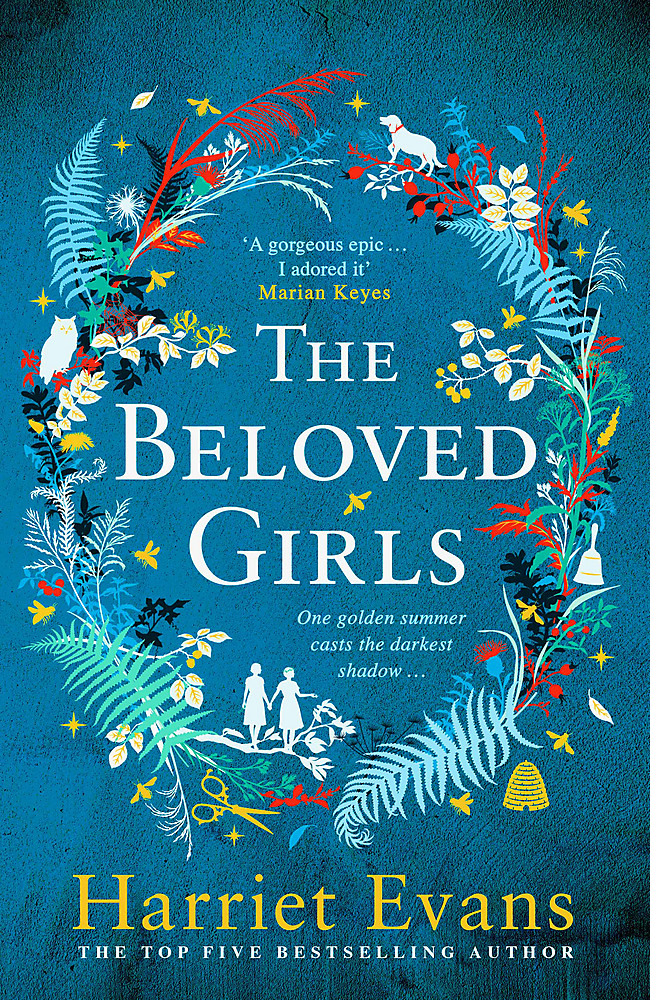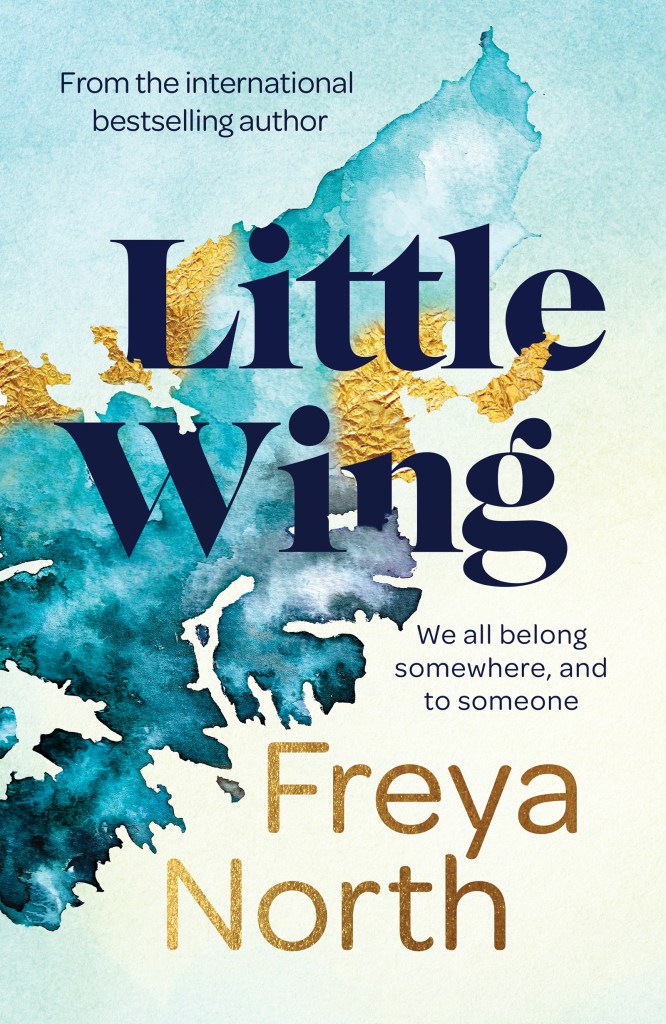
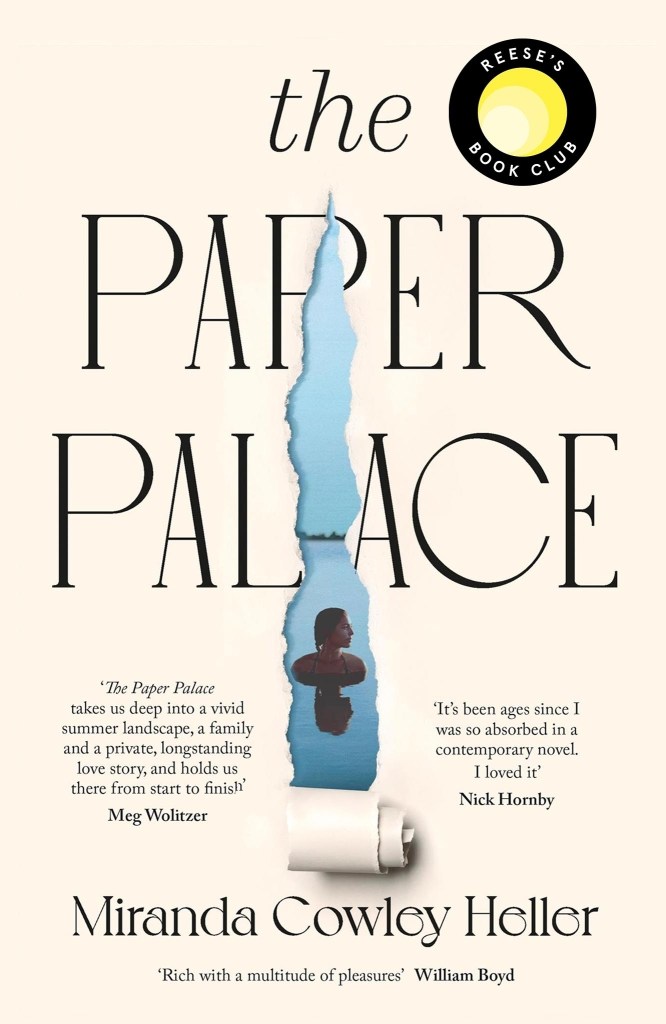
Book Review: The Paper Palace by Miranda Cowley Heller – an intense story about family, secrets and the path not taken

You can’t help feeling sorry for Eleanor (Elle) who spends the decades that span The Paper Palace unable to forget her dearest friend and soulmate. She and Jonas have been driven apart by a terrible secret – a horrific sequence of events that casts a shadow over the rest of their lives. We follow them through the years from when they first met, one Cape Cod summer, to the present day several decades later, having built their lives without each other. But we all know that secrets like theirs are sure to come out sooner or later.

The Paper Palace is the nickname given to the holiday home where much of the action takes place, in particular the single day that connects the plot. It’s the day friends and relations have come together to remember Elle’s sister. The summer home has been in the family for generations, a collection of bush-carpentry buildings that include a large kitchen/living space and a number of cabins right on the edge of a wide, swimmable pond. Here, Elle and her older sister Anna ran wild ever summer, a relief from those chilly New York winters, growing up as their parents divorce, take on new lovers, remarry and divorce again.

Elle’s mother, Wallace, states that divorce is good for children, and makes other odd declarations such as that unhappy people are more interesting. Jonas’s partner, Gina, perpetually sunny and straightforward, obviously cuts no ice with Wallace. Elle and Anna are beautiful, confident girls in spite of their mother’s remoteness, her stark comments, her lack of awareness of how her life choices affect her children. Somehow they survive their childhood, have careers and relationships.

But everything comes back to one event in Elle’s teenage years and its consequences, until a much later revelation casts a new light on a decision she made a long time ago. This plot device plus the now and before structure makes you gallop through the pages to learn how that secret will impact on the future. The writing is sharp and funny at times, but best of all is the evocation of summer and long summer vacations. There are butterflies, racoons and shorebirds: bonfires on the beach; walks through the forest as well as swimming and boating. It’s almost like you’re on holiday with them all, in one of the spare cabins. There is definitely a filmic quality, and I can see movie rights being discussed even now.

I just wish I liked the characters more. Elle has a decent career and happy marriage in spite of the events of her growing up but still agonises over Jonas, a character who me for was never quite real. Anna can be cruel, the various parental figures weak, offhand or just plain strange. People are either beautiful in an unspecified way, or if they are ugly, their flabbiness and skin conditions are described in detail. Nobody is just a bit ordinary. This was a little distasteful to me and detracted from the sympathy I should have had for the main characters. And while the story was engaging, it was also somewhat exhausting and I found it a relief to finish. A three out of five read from me.

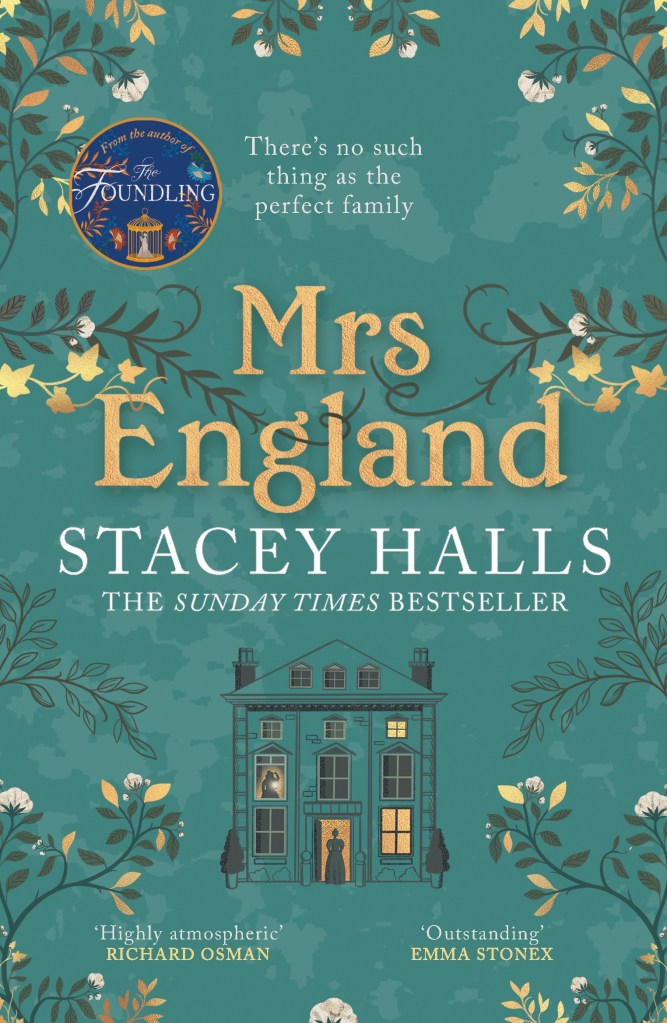
Book Review: Mrs England by Stacey Halls – secrets and suspense in a Yorkshire mill town

The blurb on the book mentioned the word ‘Gothic’ and so I opened the book expecting some chilling scenes and perhaps even hauntings. My earlier experience of this author had been The Familiars, a gripping story about witch hunts in 17th Century England. So I knew Halls could take us to some dark places. And there is a degree of darkness here, of menace even, but is it Gothic?

Certainly there’s a large stately home in an isolated part of Yorkshire. It’s mill country, and the air is thick with coal-dust from all the steam-powered cotton milling machinery. Ruby May is a Norland nanny who has just said goodbye to her first family now they’re off to Chicago. She’d love to go too, but her own family need her. She’s a humble grocer’s daughter from Birmingham and there’s a tragedy in her past that has left her hating her father and with a disabled sister.

She takes the only job on offer – nobody wants a nanny in the summer holiday season – to take charge of four children ranging from a year to ten year’s old. Mr England’s old nanny has died and the children soon warm to Ruby, who takes them on outings and supervises a better diet. She is almost like the mother to them – Mrs England rarely leaves her room. Mr England makes up for his wife’s lack of engagement with her children by being an affectionate father and is surprisingly friendly to Ruby, which she finds disconcerting.

Other characters include Mr Booth, young Saul’s tutor, who confides in Ruby that there’s something not quite right in the household. Blaise, the housemaid, is plain spoken and haughty towards Ruby, as if she suspects Ruby might lord it over the staff and wants to nip any such superiority in the bud. We meet Mrs England’s family, the Greatrexes, who own a larger mill and even a town, and with whom Mrs England has a strained relationship. So Ruby is caught between upstairs and downstairs, not quite a servant while having to tiptoe round the feelings of her employers.

Thank goodness she warms to the children, but you can’t help feeling that they could be in danger and this drives the plot. There’s a hint of The Turn of the Screw by Henry James, so perhaps that’s where the Gothic quality lies. Ruby does all she can to keep the children safe, but she can’t do it all alone, and who can she trust? The story builds to a dramatic ending and although it takes a while to get going, it’s still really engaging. I think this is because Ruby herself is interesting: her worries about her own family and in particular her falling out with her father. Halls feeds out just enough information to keep you curious.

One story thread of Mrs England is based on an event that really happened, which is briefly described in a note at the end of the novel. If you want to maintain the maximum suspense as you read, don’t read this until you finish the story, but it is extraordinary. I like the way Stacey Halls seems to draw inspiration from real events for her novels – she is turning out to be one of my must-read authors. She really gets under the skin of her characters, bringing the past to life and this book continues the trend. It’s a gently cracking read and gets a four out of five from me.
Book Review: Unsettled Ground by Claire Fuller – an atmospheric and psychological story set in rural Wiltshire

I’ve had my eye out for this book ever since it was shortlisted for the Women’s Prize for Fiction. Unsettled Ground is the story of twins, Jeanie and Julius Seeder, who at fifty-one are still living at home with their mother, Dot, when she suddenly dies. All at once they have to figure out what to do, how to manage. Dot obviously took care of the family finances, but the cake tin that stored all their cash, from Julius’s odd jobbing and the women’s piecemeal market gardening, is virtually empty. Their electricity has been disconnected because of unpaid bills, then Jeanie discovers even more debts, to say nothing of the funeral costs.

Unfinished schooling, a basic, almost off-the-grid lifestyle and a lack of real-world experience mean the twins struggle to figure out how to make ends meet or get the help they need. Jeanie is barely literate, while Julius was traumatised when his father was killed in a farming accident, which means he can’t travel by car without motion sickness. Bridget, their mother’s old friend grudgingly drives Jeanie to appointments while pouring out unwanted advice. When their landlord’s wife issues an eviction notice unless arrears in rent of thousands of pounds are paid off, things are desperate indeed.

The plot pulls you in from the start as curve-ball after curve-ball are lobbed the twins’ way. You read on hoping they make a break from the past to find some happiness. Or, at 51, is it too late? Julius has always resented the need to stay, his mother, Dot, using Jeanie’s fragile health to keep him around. Dot had always felt that making music, gardening and living off the land were all that anybody needed, creating a small family sanctuary. But all it does is fill the twins with mistrust towards the agencies that might help them and the bullying they received at school casts a long shadow.

Told from Jeanie and Julius’s point of view, you have immense sympathy for these characters, while getting a taste of what it’s like to live in a small, insular community that isn’t always kind. And at the heart of it all are one or two family secrets that will overturn everyone’s assumptions. It’s an interesting psychological study of maternal love, guilt and fear inspired by ignorance. The setting of rural Wiltshire during a cold snap in spring is an evocative background – you get the sense of nature in all its glory, ready to invade, to rot and overrun.

It’s a bit like there are two sides to everything here – the good and the bad: the good side of mothering and the dark turn it can take; of neighbours, of nature and of love. It’s a powerful story that gives you lots to think about as well as a cracking good read, with more than a hint of the old adage: be careful what you wish for. The saving grace for the twins is music, peppering the story with old folk songs that Dot has passed on to her children. Claire Fuller used a playlist while writing the book which she describes here on her website. This is my first novel by Claire Fuller, and I am sure it won’t be my last. Unsettled Ground earns a four out of five from me.

Book Review: The Famished Heart by Nicola White – an unusual crime story set in 1980s Dublin

I picked up The Famished Heart, initially thinking it would be a bit like Dervla McTiernan’s brilliant crime series featuring Cormac Reilly. They both have lead police officers who don’t fit in with their colleagues and a boss who probably doesn’t like them either. You get a good deal of police station politics in both. But this book is more of a slow-burner that reminded me of some of Ruth Rendell’s Wexford novels (now there’s a blast from the past!) with its focus on a small community and psychological drama.

We’ve got three main narrative points of view. Father Timoney is the unlucky priest called to visit two middle-aged sisters in his parish who haven’t been seen in weeks. What he finds would shock even the most seasoned of clerics: the Macnamara sisters have apparently starved to death, possibly willingly for religious reasons. Timoney has his own problems too. He’s only been in his parish a few months, has a dwindling congregation, an unheated church that is an architectural monstrosity, and a spiteful housekeeper. Throw in back pain and a lack of confidence and he’s really struggling.

Frances Macnamara is the sister that got away. She’s a glamorous actress who, now in her forties, is finding it hard to get well-paid roles, leaving her strapped for cash. She’s in New York when she receives the news of her sisters’ deaths. Flying home she teams up with a niece who was supposed to look in on her aunts, but there’d been a falling out with the older sister and she’s living in a grungy flat. So there’s nowhere for Frances to stay but in the house where it all happened. They soon get the keys because the police don’t think the deaths suspicious.

Well, Detective Inspector Vincent Swan thinks they’re suspicious; someone’s wiped any fingerprints from the door handles and made a crude arrangement of some ornamental animals. But Swan’s being stood down while there’s an investigation into police brutality. He’s not a violent man, unlike the two officers also under investigation, the kind of officers he really doesn’t get along with. Just as well Detective Garda Gina Considine is on the job. She’s the only female officer on the team and suffers sexism on a daily basis – this is Dublin in the ’80s, after all. But she’s smart and a good pairing for sensitive and thoughtful Swan.

Just when you think this story is all about religious mania – and to some extent it is – another death leads our two detectives in another direction and the plot really heats up. You finish the book thinking this is a satisfying mystery, but you’ve also come to know the characters really well. White writes about relationships superbly – throwing people together and seeing how they spark off each other and then come to new realisations. This makes you want to check in with Vincent Swan another time, so it’s good news that this is the start of a series. The second book is an earlier novel and book number three is out next year. A Famished Heart scores a four out of five from me.

Book Review: The Wildling Sisters by Eve Chase

Stories featuring old houses in the English countryside and a dark secret from the past are always entertaining. Throw in four sisters on the brink of adulthood with a glamorous but unreliable mother, two dangerous young men and an aunt who is, well, a bit batty and you’ve got the ingredients for an engrossing read.

The Wildling Sisters (or The Vanishing of Audrey Wilde) starts off with a body being dragged to a hiding place, a brief scene laced with foreboding, then flips to 50 years later when a young family are considering buying a crumbling mansion in the country. They are escaping London to start again. Jessie and Will have a preschool-age Romy in tow, as well as Bella, Will’s teenage daughter. Bella is surly and uncommunicative following her mother’s death and having to cope with a step-mother. An incident at her London school had her expelled and also makes Jessie uneasy about Romy’s safety.

The family discover Applecote, a large country house in need of repair that also bears a shadow – the disappearance of twelve-year-old Audrey Wilde in the 1950s. The locals won’t come near it and while Will gets stuck in London for work, Jessie has to deal with the burden of the new move and Bella’s bad behaviour with little support.

The story flips back to the heatwave of a 1950s summer that sees the four Wilde sisters staying with their distracted Aunt Sybil and peculiar Uncle Perry. Grief over their missing cousin Audrey consumes Sybil, and Margot at fifteen is aware of how similar she is to Audrey. She sneaks into Audrey’s room, a kind of shrine to her cousin, and admires her clothes.

And the sisters are a little wild to be sure. They’re also beautiful and have the confidence of their class and having a mother who hasn’t imposed a lot of rules. It’s just as well they have each other to rely on. Things get complicated when Harry Gore from the neighbouring estate and his friend Tom turn up by the river and flirt with the girls.

Yes, there’s a river – the logical place for Audrey to have disappeared, but there are also standing stones that add an air of youthful sacrifice, and endless summer heat that stirs the emotions. Margot tries to get a sense of what happened to her cousin, while dealing with a yearning for Harry and an emotionally demanding aunt.

There’s plenty to keep you turning the pages here; Chase keeping you guessing with cliffhangers at the end of each chapter as the story flips back and forth between narrators. Each of our main characters, Jessie, Margot and even Bella, have to deal with worrying events, as well as their tentative place in their families. This lifts the novel above being just a story about a scary house with a dark secret. Both Jessie and Margot will learn a lot before the end of the book when the puzzle pieces finally slot into place.

I really enjoyed my first Eve Chase novel. It’s a bit like reading Katherine Webb crossed with Ruth Ware and the writing is crisp and elegant too. A great escapist read, The Wildling Sisters gets a four out of five from me.
Book Review: I Couldn’t Love You More by Esther Freud – three women and the secret that divides them

Esther Freud’s new novel looks at the impact of a secret adoption on three generations of women. When Kate tries to find her birth mother, she’s not really at a good place emotionally to deal with what she might find. Her relationship with Matt is going through some difficulties and she has her daughter, Freya, to consider. Freya seems to be oddly obsessed with death for one so young. And then there’s the idea in the back of her head – why did her mother give her away? And it’s too difficult to discuss all this with her adoptive mother, who could so easily feel betrayed.

If you could give me … I try out the phrases as I help prepare the lunch, but my mother is explaining the best way to make gravy and I don’t interrupt. Afterwards she takes Freya to say goodbye to the bees. She has three hives, white clapboard, a surprising hobby for someone so concerned with peril.”

The story flips through the years to tell the story of Kate’s mother, Rosaleen, beautiful and headstrong, who escapes Ireland at eighteen for London. Her much older lover, an up and coming sculptor, has found her a job at a London newspaper where she works in the mail department, although that’s not what she tells them back home. Her family believe Rosaleen is a journalist, and her name will appear in bylines in the Express any day.

Meanwhile back in Ireland, Rosaleen’s mother Aoife (pronounced Eefa), can’t help missing her eldest daughter. Her story takes us through her marriage to Cashel, whose strict notions of propriety echo that of many Irish households in the mid 1900s. A girl who becomes pregnant is no better than she should be and must be hidden away in shame, her baby taken to a respectable family. We see the other side of this, the convents who ran laundries on the back of the free labour young pregnant girls offer in return for board and secrecy.

This is a story that has been told before, but Freud makes it fresh through her empathy for her characters. We’re taken back to the sixties, and a slice of the artistic Demi-monde, through the eyes of a young girl who for a budding reporter, doesn’t ask nearly enough questions. We’re also back in rural Ireland, with farming and rain and the endless round of chores. And then there’s Freya’s world, herself an artist, working as an art therapist, when maybe she needs a bit of therapy herself.

It’s always a joy to read Esther Freud and this novel didn’t disappoint. It took me a while to settle into the style though. I know we read a lot of books with multiple narrative viewpoints and these were clear enough through chapter headings. But the time switches confused me a little to begin with. Perhaps the disjointed time frame mirrors Kate’s state of mind – she doesn’t know where she is with Matt, her job, and the past keeps intruding on her thoughts.

If you want to read a book that takes you right into the hearts of its characters, revealing their pain – there’s a lot of it here – and their struggles to make a future, I Couldn’t Love You More is a terrific read. It’s also a powerful reminder of historic injustices against women and that the feminist movement has come a long way. The scenes in the convent that takes in Rosaleen are horrific. It’s a moving story told simply and elegantly and after a break since Mr Mac and Me (seven years!), worth the wait. Let’s hope there’s another book around the corner as Freud’s one of my favourites. A four out of five read from me.

Book Review: Death of a Nightingale by Lane Kaaberbol and Agnete Friis

This novel is the third in the Nina Borg series which began with The Boy in the Suitcase. It’s also the only one I have read. Oh, no, nags the little voice in my head – you should read them all in order! Stilling the little voice, I was soon engrossed in this engaging example of Danish noir.

Nina Borg is a nurse who has worked in some dangerous places in her role with the Red Cross. Now she’s working at a Copenhagen refugee camp, where she feels driven to save those who have fled some horrific situations in their countries of birth. Her tendency to disregard her own personal safety has meant that now she’s cut off from her husband and children and living in a dreary flat. There’s a large digital clock on the wall which triggers thoughts about what her children might be doing at any time in the day.

Nina is one of those characters you want to shout at. She’s always going it alone. ‘Call the police!’ you want to scream. ‘Get some help.’ You can see how her commitment to wanting to help people drives her. But being a maverick sleuth can be lonely. Sometimes she brings home a Swedish doctor colleague for the night, who’s also a bit lonely, but this only makes her seem even more solitary. Already, she’s an interesting main character before we even get to the story.

Flip to Natasha – a runaway from Ukraine, wanted by police at home in connection with the death of her husband, and now in Copenhagen for the death of her fiancé who is a bit of a thug with an eye for her young daughter. It’s not surprising Natasha lashed out. But somehow now he’s dead. Natasha is desperate and being on the run in a Danish winter notches up the tension. Nina is concerned because Natasha’s daughter, Rina, is very sick and isn’t doing well away from her mother. Will Natasha risk everything to see her daughter? The authorities are alert to her possible return, but somebody else is too – somebody who might wish her dead.

There’s a police officer on the case who teams up with Nina when Rina’s safety is compromised. The story also switches back to 1930’s USSR where two young girls live in a village, battling hunger and the difficulty of being a good Soviet citizen. The book captures the period following the great famine when families struggled to feed their children, and hoarding food was an offence that would see you off to the gulags, or worse.

So Death of a Nightingale has plenty of threads in a complex storyline, peopled with a large cast of characters and some interesting twists. How the grim backstory has left its mark on Natasha and her countrymen keeps the reader guessing, and isn’t made clear until the end. But before we get remotely close to that revelation, there’s plenty of action and dicing with death.

I’m glad I picked this one up, even if it is number three in a series of four. The characters are vividly drawn and the story keeps you on your toes. The scenes in Soviet Russia make for sobering reading and remind you how terrible state-led indoctrination can be with repercussions that last a lifetime. I did find the final scenes a little rushed and the complications around the point where the past catches up to the present could have been clearer. Yes, I shall probably check in with Nina Borg again, but I’m not in any hurry. A three-and-a-half out four read from me.

Book Review: The Van Apfel Girls Are Gone by Felicity McLean

Felicity McLean’s debut novel novel has been described as The Virgin Suicides meets Picnic at Hanging Rock. Set in small town Australia, the book is told in two time frames, and begins when Tikka Molloy returns home to reconnect with her sister Laura who isn’t well. She can’t stop thinking, had they did the right thing twenty years ago when their friends, the three Van Apfel sisters vanished. She looks back on that sweltering summer when she was eleven and the events that led up to their disappearance.

Tikka is a great child narrator – she reminds me a little bit of Scout from To Kill a Mockingbird, if we’re thinking of book comparisons here. She’s smart and imaginative and comes from a loving family. At the corner of their street live the Van Apfels and Tikka and Laura spend a lot of time there as the family has a pool. The Van Apfels attend a fundamentalist church – their dad, though outwardly genial, is particularly strict and this causes tension with his wayward thirteen-year-old daughter Cordelia.

There’s a lot of Tikka trying to make sense of her world and understand what’s going on with the grown-ups, and the tension that seems to lurk at the Van Apfels. There’s a new teacher, Mr Avery, who has a mysterious past that may have included a stint in prison – as rumour has it. So along with the simmering heat there is plenty of simmering tension as the school plans its big, Showstopper concert at an outdoor amphitheatre, for which Tikka has written her own skit and where events build to a climax.

In true Aussie Noir style, the landscape plays a big part in this novel. The mangroves around a brackish estuary create a sinister backdrop (Tikka complains of an unpleasant smell); the empty landscape beyond; the heat bouncing off the tarmac. It all adds to the mood and tension of the book. And there is a hint of the unreliable narrator about Tikka. How accurate are her memories from childhood? Even now as an adult she still can’t help looking for Cordelia (Cordie) at railway stations, at busy intersections, her blonde head just disappearing around corners, failing to stop when called. The Van Apfel girls may have disappeared that summer, but a part of Tikka seems to have been lost as well.

The Van Apfel Girls Are Gone is an impressive debut, a character driven mystery that is also quite the page-turner. There is plenty of humour with the way McLean re-imagines childhood, the rivalry between sisters and between classmates, the rumours and the secrets, the superiority of the older kids. This balances out the sadness of what happens and the feeling of lost innocence which runs through the story. Not a long book, McLean’s novel is well worth picking up, and heralds a promising new author to look out for. A four out of five read from me.

Book Review: Nothing But Blue Sky by Kathleen MacMahon

When winter starts to bite, there’s nothing like a book cover showing a summery scene to make you want to pick it up. Kathleen MacMahon’s latest book, Nothing But Blue Sky describes a succession of summer holidays spent abroad, mostly on the sunny Costa Brava. 

David Dowling is recently bereaved – his wife, Mary Rose, killed in a plane crash while she was on her way to a wedding. Ever since they were newly married, the couple have holidayed at the same Spanish seaside town, visiting the same restaurant over the years, the same bar for their pre-dinner aperitif. They’ve people watched, making up stories in particular about a glamorous French family.

In many ways, this is the story of a marriage. David is a cynical foreign correspondent, who doubts his capacity for happiness. His parents seemed to live in a loveless marriage, his father bullying his mother, just as his older brother bullied David. When David meets Mary Rose, he is swept up into the world of his girlfriend’s family, a home full of joy and conversation and people who actually seem to like each other. David discovers another way to live, but can’t quite shake off his inner doubts, his bad cop to Mary Rose’s good cop routine.

When Mary Rose dies, David’s grief is all-consuming. He revisits the events of his marriage – Mary Rose’s goodness and optimism, their childlessness, the way they just seemed to gel, their disagreements. The book weaves their story together in chapters that read a little like a succession of short stories highlighting different aspects of their relationship.

A summer holiday with friends, soon after the air crash, is a miserable affair for David, so he bravely takes himself off to Aiguaclara one more time, and the possibility of starting again takes shape. 

MacMahon draws you slowly into the novel, and in David has created a brilliant character study. How do you deal with feelings, when you’ve spent a lot of your life suppressing them? David is a difficult character but oddly likeable, and you want him to learn a little empathy and trust. This is such a sensitive portrayal about love and loss, about happiness and grief, nuanced and yet also very entertaining. 

The book reminded me a little of novels I’ve read by Anne Enright as well as Andrea Levy. I can’t wait to read more by MacMahon. Nothing But Blue Sky earns a four and a half out of five from me.

Book Review: Home Stretch by Graham Norton

I listened to Home Stretch as an audiobook, and this is a terrific option in this case as the book is read by the author. Graham Norton has a warm and vivid reading style – he has the kind of voice that sounds friendly and the humour never seems all that far away, even when the plot takes a serious turn. Which it does quite often.

The story concerns young Connor, who is caught up with a bunch of local teenagers on the eve of a wedding, tagging along on a trip to the beach. He’s the son of a publican in one of those tiny Irish coastal towns where everybody knows everybody and there’s no hiding any secrets, or so we might suppose. When the car crashes and three are killed, including the bride and groom, another girl left fighting for her life, Connor carries the shame of being the driver responsible.

After the court case, Connor is sent to Liverpool to work for a cousin’s building business and sets out to forget his family, his town and all that has gone on before. But Connor has another secret – he is gay – something he has never been able to mention to his family; this is 1987 after all. When fate conspires to send Connor to London and later to the US, it seems like he can never go home.

The story weaves between Connor’s and that of his sister, Ellen, rescued from shame by Connor’s fellow crash survivor, Martin, the doctor’s son. Martin seems to be the white knight, dazzling Ellen with thoughts of new beginnings. Things don’t quite turn out for Ellen as she may have hoped, and eventually the past will come back and secrets will emerge. Can Connor ever make his way home again and find acceptance in his family?

The story switches between viewpoints and jumps through the decades to the time of the referendum that voted for legalising gay marriage in Ireland. Even Connor’s dad put up a ‘vote yes’ poster in the pub, so the book mirrors changes in society as well as several dawning realisations among the main characters. I felt this was perhaps a more personal story from this author, and it is easy to imagine Norton weaving in some of his own experiences and insight about the gay scene and the shifts in public perception over time.

My only reservation was that sometimes we seem to be fairly galloping through the years and I could happily have stayed awhile longer here and there. But at least this keeps the reader hooked on the story, wondering if Connor will ever make it home to face the past. The book is told with very real feeling and any parent will relate to the fear of never seeing their child again. Norton has such a deep empathy for his characters, even the ones we are not supposed to like are not painted entirely black – there is understanding for them as well.

I loved the dialogue which is very real and lively – Norton having a keen ear for the way people express their personalities in speech. And then there’s the humour, just twinkling away in the background, caught in the banter of characters’ interactions, the way they perceive themselves, the foolishness of youth, the misunderstandings. Home Stretch is a heartfelt and entertaining read, and I thoroughly recommend the audiobook version and Graham Norton’s splendid performance. A three and a half out of five read from me.