Book Review: The Lamplighters by Emma Stonex

I’ve read a few books where lighthouses appear in the story, often in a metaphorical sense as an evocation of hope or constancy, or even desire. These ideas also appear in Emma Stonex’s novel The Lamplighters, but here the story follows the lives of lighthouse keepers and their families and the very real lighthouse which is the men’s home for a large part of their working year. Inspired by real events, the book takes us into the world of three lighthouse keepers in 1972, and what happens when their lighthouse is found abandoned, the keepers missing, but the door locked and bolted from inside.

You have to be certain kind of person to be in the lighthouse service. Principal Keeper, Arthur Black, likes the quiet and solitude of his eight-week stints on the remote lighthouse known as the Maiden. The service gives the men a cottage on the nearby Cornish coast, but he doesn’t seem to miss his wife, Helen, who waits for his return. He’s considered a good man, able and sound and obviously kindly, but have all his years in lighthouses taken their toll?

Postcards never finished; postcards never sent. I tear them up and drop them into the sea so I can watch them float away. In another life, a lucky one, I see the pieces washing onto shore. She’ll find them, gather them to her, put them back together. It will all make sense.

Assistant Keeper, Bill Walker, is from a family of lighthouse keepers and was never given the choice to be anything else. You can tell he’s had enough but then he’s almost at the end of his eight-week stint, so naturally he’s looking forward to his time on shore. At home with three young children, his wife Jenny finds the eight weeks the hardest, and fills her days filling the cake tins, and drinking.

The third keeper is the young Supernumerary Assistant Keeper, Vincent Bourne. He’s had a tough life, in and out of foster homes, and then in and out of prison. But when he meets Michelle, he determines to turn his life around and have the proper family he’d missed out on. The Service offers him a chance and when he’s made Assistant Keeper, he’ll get a cottage too. So while it might be easy to blame the mysterious disappearances on bad-lot Vinnie, he seems the least likely to lose it and do something rash.

The story flips to 1992, when an adventure-thriller writer revisits the events of twenty years before, planning to write a book and solve the puzzle. Told through the viewpoints of the three women left with no answers, but a financial to keep quiet, secrets start to emerge. The tension escalates, as the story switches back to the days leading up to the tragedy, as well as describing the sensitive relationships of the women on land. The ending is taut and you rush through the pages to find out what happened, in a small way comforted in the resolution for those left behind.

This is a masterful novel, written in elegant and at times poetic prose – maybe it’s hard to avoid if you are writing about the sea and the weighty themes we traditionally associate with lighthouses. The novel makes these themes all the more real but in new ways. It’s a psychological novel too, getting inside the heads of the men and their women, picking out their motives and triggers, their passions and resentments.

Emma Stonex has done her research well and the books she lists as inspiration are books that look well worth a read. I can’t help thinking that lighthouse keepers are forgotten heroes and want to know more. I’m going to stick my neck out and give The Lamplighters a rare five out five.

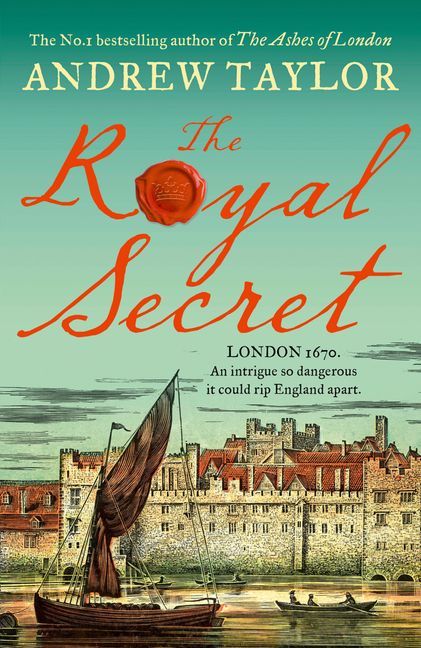
Book Review: The Royal Secret by Andrew Taylor

The Marwood and Lovett series is such a joy for anyone who loves a good mystery, with a historical setting that takes you there. Taylor’s series brings alive the nitty gritty of everyday life plus the machinations of the powerful at court. Set during the reign of Charles II, The Royal Secret has government agent James Marwood investigate the death of a former colleague, a Mr Abbott. He comes across the man in his cups and full of regret on his way from a gambling house.

When Abbott dies suddenly, it is hard not the think about the opening scene of the novel, where Abbott’s stepdaughter and a young maid plot his death by witchcraft. But the twenty-first century reader knows that the man’s death will be a lot more complicated than that. Another incident sees Marwood getting in Cat Lovett’s bad books when he takes her to the theatre and ogles the leading actress. The two have been friends and associates through several hair-raising adventures and now meet regularly for outings. Dating? I think not.

Cat has inherited her husband’s architecture business and at the theatre, meets her client, Mr Fanshaw, along with a Dutchman, Mr Van Riebeeck, a family connection of Fanshaw’s. Cat is charmed by Van Riebeeck, while Marwood takes an instant dislike to the man. The scene also introduces us to the world of the Dutch in England at the time and the political difficulties posed by rivalry between the Netherlands and France. This rivalry will come closer to home when Cat earns a commission to design a poultry-house for the King’s sister who lives at the French court. So many threads of historical interest.

The plot ramps up with plenty of action – James Marwood seems to attract trouble, as his suspicions around Van Riebeeck grow along with jealousy over Cat’s growing friendship with the man. There’s the usual tension of Cat and Marlow’s see-sawing relationship and Marwood is often in trouble with his own servants, which adds a degree of lightness.

While we get to see kings and their courts close up, their finery and excesses, Taylor doesn’t stint when it comes to describing the grubbiness of ordinary life in the 1600s. Characters puke, piss and evacuate their bowels in fairly graphic ways, not surprisingly when there are growing suspicions of poisonings. He throws in some other quirky details, such as the interest in collecting by the wealthy. Fanshaw, an avid collector, adds a disconsolate and elderly lion to his household, caged in the garden to impress visitors.

It’s a brilliant read, well-researched, pacy and as for the characters, I can’t get enough of Cat and Marwood – they are so lively and interesting. Sometimes you want to bang their heads together. But in a world where it is important to find favour in the right places, not just to succeed but to survive, they are refreshingly themselves and more inquisitive than is good for them. I can’t wait for the next book in the series. This one’s a four and a half out of five from me.

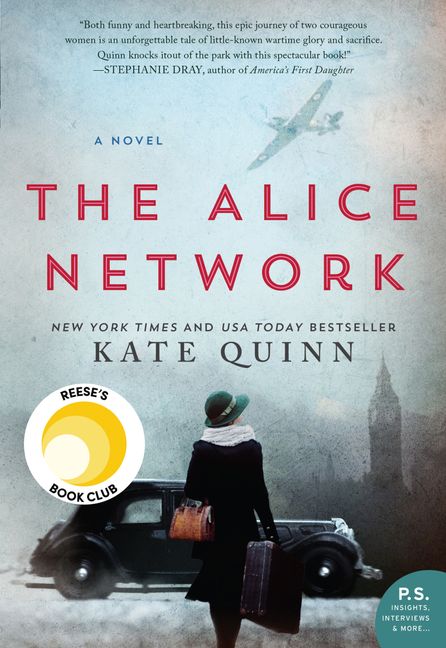
Book Review: The Alice Network by Kate Quinn

There have been quite a few novels telling the story of World War II female British agents dropped into France, and their resistance fighter counterparts, and they often make good reading. It was a time for women getting to do some gutsy jobs, involving danger and cunning – not the usual ‘keep the home fires burning’ roles they were often accustomed to. But what about the earlier war? Kate Quinn puts us in the picture with one particular network run by Alice Dubois (real name Louise de Bettignies) in German occupied France during the First World War.

Although The Alice Network is partly written through the eyes of a fictitious character – Evelyn Gardiner, a British spy (code name Marguerite Le Francois) – Dubois and her network of spies are also incorporated into the story. We first meet Eve years later as an ageing drunk with deformed hands, a bad temper and a tendency to wave her Luger around, firing off a round when startled.

It’s an evening in 1947 when nineteen-year-old New Yorker, Charlie St. Clair, hammers on Eve’s door demanding to be let in. It’s pouring with rain, and Charlie has escaped her mother during a visit to Europe for a completely different purpose. Charlie is determined to track down a long lost French cousin, Rose, angry that no one has found out what happened to Rose in the recent war. Without a death certificate or witness statement, she still hopes Rose is alive. Eve, working at a bureau that helped locate refugees, had corresponded with Charlie’s father about Rose giving no reason for hope.

That’s not the only problem for Charlie – she’s three month’s pregnant and was supposed to be going to a clinic for an abortion. But Charlie needs to track down Rose before it’s too late and take control of her own life. Eve is set to turn Charlie out into the street, but a new lead sparks her curiosity. Before long they form an unlikely alliance, heading to France with Eve’s Scottish hired help, Finn Kilgore, in his ageing Lagonda. Finn also has his own war story, which eventually emerges, but the narrative is mostly Eve’s and Charlie’s, flipping between WWI and 1947 to fill us in on the story of the Alice Network, and Charlie’s journey of discovery.

This is a nicely paced novel. The story of Eve’s war is a grim one, unfolding to reveal how women spies picked up gems of information about troop movements and planned attacks. Eve, with her stutter, looks naive and youthful, but as a waitress in the only decent restaurant in Lille, is an ideal spy with her ease in both French and German. There’s lots of tension here and the sudden switches to Charlie’s story give a bit of light relief. Although her’s is a sad story too, there’s a bit more fun in the way the three travellers interact and develop a grudging respect for each other. Things simmer between them until the past finally catches up with the present and everything comes to a dramatic finish.

I enjoyed the novel immensely as an escapist read, but was also really interested to learn more about the spy-ring run by Alice Dubois and the fate of those who were captured. Remembering that this is a time before women had the vote in Britain, it’s remarkable how these female agents were allowed to take on dangerous missions behind enemy lines. The execution of Edith Cavell, a nurse shot for aiding the escape of Allied soldiers, is a stark reminder that this wasn’t a game.

The characters of our three main players are both interesting and engaging, and the cliff-hanger chapter endings keep you racing through the story. It’s not surprising this novel has been extremely popular and well-recommended, and many will be eager to read Quinn’s new book: The Rose Code. The Alice Network is a four out of five read from me.

Mystery Series Catch-Up, Round 2

Here’s a snapshot of my crime fiction reading from recent months – old series I’ve been following for years plus one or two newbies. They are all so completely different from one another, it makes you realise how varied the mystery genre is.

The Night Hawks by Elly Griffiths
Norfolk seems to be such a boon for Griffiths with its atmospheric tidal zones, archaeological sites and old ghost stories. We had the lantern men last time (apparitions that led you to your swampy doom) and this time we’ve got the Black Shuck (a huge black dog who foretells your death). Meanwhile academic Ruth Galloway and DI Harry Nelson deal with more crime – this time the body of a young man found on the beach by the Night Hawks – a group who go on midnight forays with metal detectors. When the detectorists happen on some ancient bones and weaponry, Ruth’s not best pleased – they could interfere with a Bronze Age burial site. But soon there are connections with the dead man and of course one or two more murders keeps the story on the go. This was such an easy but engrossing read. Griffiths writes so well for this genre, and at number 13 in the series, still manages to come up with terrific storylines and interesting character development for her two sleuths.

A Divided Loyalty by Charles Todd
This is the twenty-second in the series, which is surprising in that we’re still only in 1922. But since his return from the war, Inspector Ian Rutledge has had no end of perplexing murders to solve, often, as with this one, where the outcome will cause displeasure to his boss. Never one to opt for the most obvious solution, Ian always has to dig deep and this causes ructions. All the time, he hears the voice in his head of Hamish McLeod, the subordinate officer he’d sent to the firing squad during the war. In this book, a woman found murdered under one of the Avery standing stones draws a blank from one of Scotland Yards best DCIs. Sent to reinvestigate, Ian discovers she was foreign, possibly French, and had connections to someone he has respect for – hence the title. It’s another brilliant read in this well-researched series that brings post-WWI Britain to life.

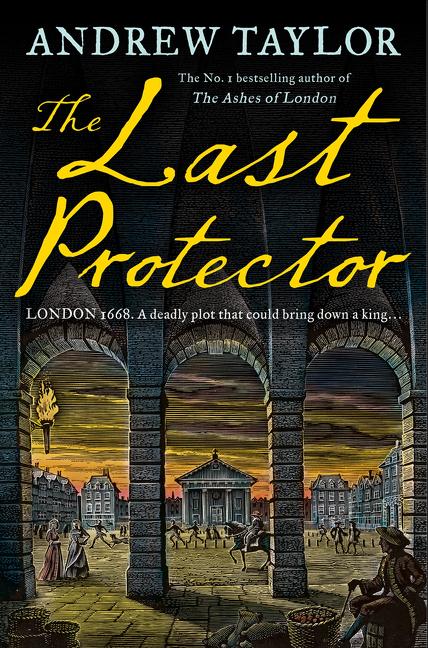
The Last Protector by Andrew Taylor
This is such a terrific series, combining intelligent mystery plotting, thrills and danger with historical detail. One of the best things about it, though, is the pair of sleuths: young government agent James Marwood and would-be architect Cat Lovett. When Richard Cromwell, son of the late Lord Protector, slips into England from exile, James is tasked with finding out his motives. His appearance could trigger a movement to defeat the monarchy of Charles II and more civil war. Meanwhile Cat is drawn into the circle of the Cromwells, having known the family as a child. As usual, both sleuths play a dangerous game of their own, caught up in intrigue, sometimes working together, but keeping secrets too. There’s an emotional bond between them, but with James’s work for the Crown and Cat’s marriage to her elderly husband, any deepening of their relationship seems remote – for now.

A Brazen Curiosity by Lynn Messina
I picked up this bargain ebook – the first novel in the series, which features Regency heroine Beatrice Hyde-Clare, with a nod to Jane Austen. Beatrice, at twenty-six, is considered past her prime and an old maid when she accompanies an aunt and cousins to a country house party. One night she wanders down to the library in search of a good book, where she comes upon the eminently eligible Duke of Kesgrave, as well as a dead body. The local magistrate deems the death a suicide, but both the Duke and Bea know better. The two form an awkward team to hunt down the real murderer, which in a grand house full of grand guests, can only make them unpopular, well Bea anyway. His loftiness, the Duke, is above all that. The story is a light, fun read, with plenty of Austenish banter and lively characters. Plenty more books in the series, too.

Dead on Dartmoor by Stephanie Austin
When I picked up this, the second in the series, I didn’t expect it to be so action packed. It begins when Domestic Goddess Juno Browne’s van catches fire, almost roasting a wee dog. If you remember, Juno does odd cleaning jobs and dog walking for people, as well as running an inherited antique/junk shop. Fortunately, James Westerhall, owner of Moorworthy Chase, arrives to the rescue, and is so magnanimous as to invite Juno and chums to run a stall at his upcoming garden fete. But when one of them goes for a walk and ends up dead, Juno begins to wonder if there is something going on at the Chase that’s worth killing for. Another madcap adventure that builds to a thrilling conclusion, with Juno having to do a lot of skullduggery along the way. Great fun.

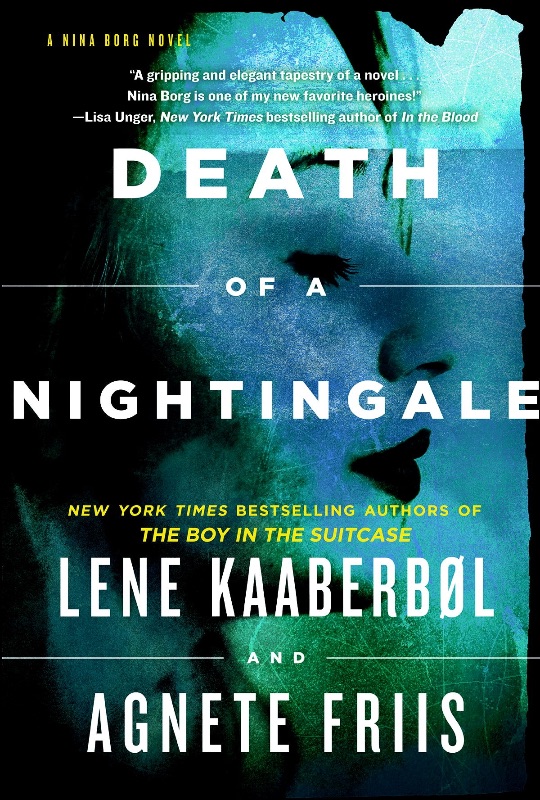
Book Review: Death of a Nightingale by Lane Kaaberbol and Agnete Friis

This novel is the third in the Nina Borg series which began with The Boy in the Suitcase. It’s also the only one I have read. Oh, no, nags the little voice in my head – you should read them all in order! Stilling the little voice, I was soon engrossed in this engaging example of Danish noir.

Nina Borg is a nurse who has worked in some dangerous places in her role with the Red Cross. Now she’s working at a Copenhagen refugee camp, where she feels driven to save those who have fled some horrific situations in their countries of birth. Her tendency to disregard her own personal safety has meant that now she’s cut off from her husband and children and living in a dreary flat. There’s a large digital clock on the wall which triggers thoughts about what her children might be doing at any time in the day.

Nina is one of those characters you want to shout at. She’s always going it alone. ‘Call the police!’ you want to scream. ‘Get some help.’ You can see how her commitment to wanting to help people drives her. But being a maverick sleuth can be lonely. Sometimes she brings home a Swedish doctor colleague for the night, who’s also a bit lonely, but this only makes her seem even more solitary. Already, she’s an interesting main character before we even get to the story.

Flip to Natasha – a runaway from Ukraine, wanted by police at home in connection with the death of her husband, and now in Copenhagen for the death of her fiancé who is a bit of a thug with an eye for her young daughter. It’s not surprising Natasha lashed out. But somehow now he’s dead. Natasha is desperate and being on the run in a Danish winter notches up the tension. Nina is concerned because Natasha’s daughter, Rina, is very sick and isn’t doing well away from her mother. Will Natasha risk everything to see her daughter? The authorities are alert to her possible return, but somebody else is too – somebody who might wish her dead.

There’s a police officer on the case who teams up with Nina when Rina’s safety is compromised. The story also switches back to 1930’s USSR where two young girls live in a village, battling hunger and the difficulty of being a good Soviet citizen. The book captures the period following the great famine when families struggled to feed their children, and hoarding food was an offence that would see you off to the gulags, or worse.

So Death of a Nightingale has plenty of threads in a complex storyline, peopled with a large cast of characters and some interesting twists. How the grim backstory has left its mark on Natasha and her countrymen keeps the reader guessing, and isn’t made clear until the end. But before we get remotely close to that revelation, there’s plenty of action and dicing with death.

I’m glad I picked this one up, even if it is number three in a series of four. The characters are vividly drawn and the story keeps you on your toes. The scenes in Soviet Russia make for sobering reading and remind you how terrible state-led indoctrination can be with repercussions that last a lifetime. I did find the final scenes a little rushed and the complications around the point where the past catches up to the present could have been clearer. Yes, I shall probably check in with Nina Borg again, but I’m not in any hurry. A three-and-a-half out four read from me.

Book Review: The Inheritance of Solomon Farthing by Mary Paulson-Ellis

This is a very smart, quirky novel spanning two time periods, from the recent past and flipping back to tell a story from the final days of the First World War. Godfrey Farthing is a captain of a small group of men who stumble upon an abandoned farmhouse with cabbages stored in the larder, chickens in the yard. As November 1918 dawns, rumour has it that an armistice will soon be signed – all Godfrey has to do is keep his men safe until then. Godfrey grieves all the young boys who have died when he sent them over the top, especially young Beach – surely there can’t be any point in more fighting.

If only his raw, straight out of training second-in-command, Lieutenant Svenson, wasn’t so eager to get some action before it’s too late. He’s two things Godfrey wished he wasn’t: a keen gambler and a man who loves his Webley revolver. The men, sequestered in the barn, pass the time with trivial games of chance, betting with odd trifles: a spool of thread, a sixpence, a wishbone, a piece of ribbon. Against Godfrey’s orders, Svenson insists on joining the men, but his manner is teasing, creating edginess and discord. When a young soldier (they are mostly still in their teens) arrives with the orders Godfrey dreads, personality clashes and secrecy threaten to destabilise Godfrey’s plans with tragic results.

Woven in with this story is that of Godfrey’s grandson, Solomon Farthing, who, in Edinburgh decades later, is trying to work his way out of a run of bad luck. He owes a local criminal boss a load of money he doesn’t have, and to make matters worse he’s been caught breaking into a house for an oddly innocent reason. A police officer who owes Solomon a favour gets him off, but there’s a catch. He must track down the family of one recently departed elderly gent, Thomas Methven who has no obvious next of kin. Thomas had 50,000 pounds in used notes sewn into his burial suit, a tidy sum with the kind of commission that might see Solomon through his tight patch.

Solomon is an heir hunter, and with four days to come up with an answer, the story takes him on a roller-coaster through the past, connecting dots and in particular the odd objects left behind, some of which have their origins in his grandfather’s pawn shop – another trip down memory lane. It’s a problematic case in many ways, and Solomon will have to face down rival heir hunters and his own demons, charging about the country-side in his aunt’s borrowed mini, acquiring a dog and the help of a miscreant boy along the way.

Solomon’s character reminds me a bit of someone from a Restoration comedy – he is such an unlikely hero. But somehow he makes connections that others don’t and it all harks back to those days just before the Armistice, on an abandoned farm in France. The fragments come together that explain the fifty thousand pounds, but also the story of Solomon himself – his parentage, his life with his grandfather at the Edinburgh pawn shop, his love and loss. The war story that is the basis of all that follows is a tense counterpoint to the more madcap story of Solomon’s search, because we all know that many soldiers died in those final days of the war and there are sure to be losses. But who?

The Inheritance of Solomon Farthing takes some interesting turns and produces an unexpected ending and resolution. It is such an original story with a cast of memorable and odd-ball characters – that Restoration comedy thing again, maybe. The writing is crisp with a smartly sardonic undertone that makes it a pleasure to read. Overall it might read like two distinctly different stories woven into one and not everyone will agree that this works successfully. However, I found that the Solomon story made for pleasantly light relief from the war story, with its sense of impending tragedy. I enjoyed the book a lot and will definitely read more by Mary Paulson-Ellis. A four out of five read from me.

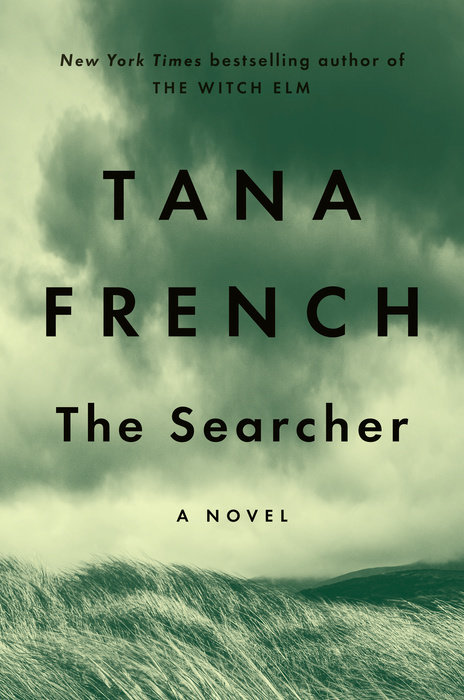
Book Review: The Searcher by Tana French

I loved Tana French’s last book, The Wych Elm – a twisty, psychological mystery with loads of secrets, a troubled, unreliable main character and a beguilingly chatty narrative voice. So naturally, I was keen to see what she would come up with next. I expected something similar with The Searcher, but really this is quite a different sort of novel altogether.

For while we back in Ireland, this is rural Ireland, not an Irish city, and we have a very different way of doing things, a slower pace that suits the story as well. And our narrator, Cal Hooper, is a retired cop from Chicago, so the narrative voice is quite different too. He’s not a high flying ex-detective either, more a veteran of the beat, well aware of the sorts of crimes committed by the young and the desperate. Which comes in handy when he meets thirteen-year-old Trey.

Cal is two-years single, and for some reason thinks what he wants is a small holding in the middle of nowhere, the local village boasting a shop and a pub and not much else. His house needs everything done to it, and he is slowly putting in the hours with the paint and sandpaper when his cop’s sixth-sense tells him someone is watching him. So what does he do? He puts soil under his windows so he can check for footprints. Eventually he meets the ‘spy’ – a scrawny teenager with a problem, if only Cal can get the truth out of him.

Eventually Trey spills the beans – his older brother is missing. Trey comes from a family shunned by the villagers because of a bad-news father, now in Dublin, and a bunch of kids known for truancy and minor misdemeanours, a mother that’s not really coping. Nobody gives them a hand, which says something about the locals. Cal tells Trey how the police go about investigating missing persons and reluctantly puts together a plan. This includes talking to witnesses, the friends and associates that might know something to create a picture of what Brendan was up to before he disappeared.

The Searcher is a slow-burner that may lose the less-persistent reader. We have to meet the locals: Mart the chatty neighbour who gives Cal stick about women and invites him to the pub; Noreen, shopkeeper and town gossip; Lena, the potential love-interest. There’s Donie MacGrath, the town low-life who thinks he’s way smarter than he is and Mart’s odd-ball friends. Random sheep are savaged and down at the pub there is talk of wild cats and UFOs. It’s hard for Cal to get anybody’s story straight, there is just so much blarney.

But the pace picks up and pretty soon Cal finds there are secrets someone is determined to keep hidden to the point that things take a more violent turn. This does a lot to add suspense, but so does the atmosphere which is created out of the setting with its wild and lonely scenery, the natural distrust of the villagers for any disruption to their way of life. The author also creates a picture of a place with no future, its youth leaving in droves, or finding other outlets for their desperation.

Tana French does a brilliant job to bring this all together in a dramatic and sensitive way, making this a very intelligent sort of crime novel. Cal is a great character, being such a fish out of water and surprisingly trusting for an ex-Chicago cop. He has plenty to learn about people and his place in village life. The story builds to an ending that keeps you with bated breath, and a resolution that for me was deeply satisfying. And while The Searcher is quite a different reading experience from The Wych Elm, the two are both crafted, character-driven novels exploring the dark side of human nature. This one’s easily a four out of five star read from me.

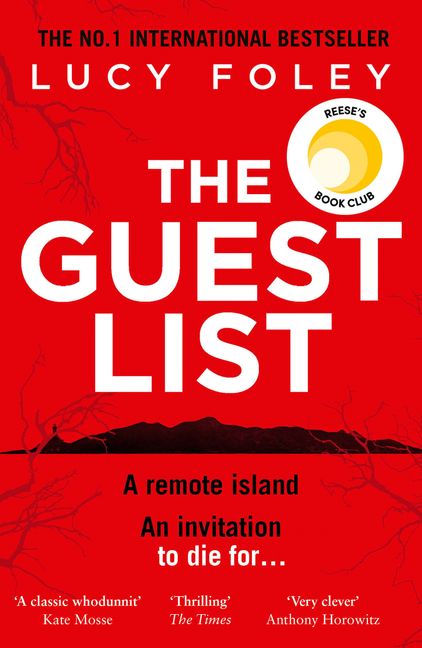
Book Review: The Guest List by Lucy Foley

This book has been a Reese’s Book Club pick and voted a winner in its genre on GoodReads for books published in 2020. So naturally I was keen to see what all the fuss was about. The Guest List is a book you want to pick up for a number of reasons. It’s set on an island – this one’s a wild sort of place off the coast of Ireland with an old graveyard, ruins and a folly. For some reason Aoife and Freddie have thrown all their money into turning it into a high-end wedding venue.

Think about it. Guests are ferried out by boat. Special guests – the wedding party, groomsmen and bridesmaids mostly arrive the night before. The Folley offers several luxurious bedroom suites. There’s plenty of champagne and Freddie’s an amazing chef; the views are spectacular and the ruined chapel so romantic – if you like that Byronic sort of thing.

Then there’s the Agatha Christie feel about the story. It’s hard not to see a reference to the Queen of Crime’s And Then There Were None. As we all know, when you’re on an island, all you need’s bit of bad weather and you could be stuck there. Add something like a murder and things will get tense.

But this story’s a bit different. First of all there’s no sleuth. Not only is there no sleuth, but even though there’s blood and a hysterical waitress screaming, we don’t find out until the end who the victim is. It’s like all the work has to be done by the reader. Which keeps you really engaged as the story flips between ‘Now’, i.e., the hours following the discovery of the blood, and what happened before the wedding.

The story also flips between narrators. We’ve got the bride, Jules, who while being a smart owner of an online magazine, wealthy in her own right, and about to marry hunky TV reality star Will, is really uptight. She’s got baggage and a temper. There’s Olivia, her sister and bridesmaid, much younger and fragile. She’s got a secret and it’s eating away at her. Can Hannah prise it out of her? Hannah, the Plus-One, is the wife of Charlie who is Jules’s best friend.

Hannah feels insignificant in Jules’s presence, a stay-at-home mother of two who can’t afford designer labels. Plus she can’t help wondering if her husband and Jules have ever been lovers. Add the fact that something happened on the stag do that Charlie won’t talk about and she’s dealing with a lot of stuff. We’ve got wild-boy Johnno, the best man and supposedly Will’s best friend. There’s some kind of hold they have on each other from their time at their Dotheboys Hall type boarding school. So, yes, there are a heap of secrets. We soon get the feeling Aoife has secrets too.

The reader gathers whatever clues are to hand, then as the plot twists and turns appear, you rethink, cross that motive off the list and try again. It gets you racing towards the end, and while I did manage to guess ‘whodunit’ as part of a possible scenario, there were still enough surprises to keep me happy. I can certainly see why this book has been so popular. Is it worth all the fuss? Mmm – perhaps not for me. It’s not a book I would read twice, as its main interest lies in the trick of its construction. It’s a good trick but the characters aren’t particularly good company – far too anguished and self-absorbed. The lack of a sleuth meant I wasn’t as drawn in as I might have been. I’m giving this one a solid three out of five.

Book Review: The Postscript Murders by Elly Griffiths

You can tell best-selling author Elly Griffiths has had a ton of fun setting her new Harbinder Kaur mystery around the world of publishing. You can’t help wonder how much of her own experience she’s slipped into the narrative.

The Postscript Murders begins with the death of ninety-year-old Peggy Smith, discovered in her flat by Natalka her Ukrainian caregiver. Because of Peggy’s age, the doc writes it off as natural causes, but Natalka, ever suspicious, believes it’s murder and says so to DS Kaur. Harbinder agrees to look into it, impressed by Natalka’s accent which makes her sound like a spy.

And it’s kind of suspicious how Peggy’s son, Nigel, has her cremated so quickly, her flat boxed up and ready to sell. Just as well Natalka has kept a key. She teams up with Benedict, a former monk who now runs the Coffee Shack on the beach front, and the two sneak into Peggy’s flat where they discover numerous books with Peggy credited in the dedications. She helped the authors with their murder plotting, it seems. A masked gunman who surprises them and then steals a book has them knocking on the door of Peggy’s neighbour Edwin to phone the police.

While DS Kaur is playing catch-up, the unlikely crime-solving trio of Natalka, Benedict and Edwin follow a trail of clues all the way to a literary festival in Aberdeen, tracking down all the crime writers who used Peggy’s services. A new murder keeps Harbinder busy as well as threats close to home so it becomes difficult to rein in Team Natalka. Bubbling away under the surface are subplots including Natalka’s bitcoin shenanigans which have her watching over her shoulder for heavies involved in organised crime, and Harbinder’s ongoing inability to tell her parents that she’s gay. At thirty-five she’s still living at home enjoying Mum’s cooking while her parents hope for a good match for their daughter.

This is a very character-driven story, with much humour coming from the interconnection of the bunch of misfits making up an unlikely cast. Harbinder is an engaging sleuth with her smart policework and ironic mutterings. A glimpse of the publishing industry, the marketing gimmicks, fandom and the sometimes awkwardness of literary festivals creates an interesting backdrop. I chuckled all the way through, not guessing the ending, but not minding if I did as this was such a fun read. Four out of five stars from me.

Book Review: The Sixteen Trees of the Somme by Lars Mytting

I may be wrong, but The Sixteen Trees of the Somme could be the first Scandinavian book I have read that wasn’t a crime novel. Not that there aren’t some terrible events here: war, genocide, theft, a disputed legacy, blotted reputations and simmering feuds. Why throw in the police as well? There’s also a fairly mind-boggling mystery at the heart of the story.

Edvard has grown up on a remote potato farm in Norway under the care of his grandfather, Sverre. His parents died with he was three in mysterious circumstances while on holiday. The family of three were on a road trip to visit the birthplace of Edvard’s French grandmother, a farm adjacent to the battlefield of the Somme. Young Edvard went missing for several days before being left at a doctor’s surgery. Nobody knows who cared for him before Sverre arrived to take him home.

When his grandfather dies, a beautifully crafted coffin has been kept for him at the undertakers, which can only have been built by Sverre’s brother, Einar, a master cabinet maker. Edvard may have left it at that, buried his grandfather, and carried on with the farm. There’s Hanne, a high-school sweetheart back home from veterinary college, to hang out with. But the past nags at him and before long, Edvard is following a trail of clues to a tiny island off the Shetland coast called Haaf Gruney, in search of the uncle he hardly knew.

The Shetland Islands have a long Norwegian history, before becoming part of Scotland, and it is curious just how many place names and turns of phrase have a Norwegian ring to them. Edvard arrives off the car ferry from one remote spot on the atlas to an even remoter one with very little life experience. Soon he meets the much more savvy Gwen, a young woman the same age as Edvard, with a strong connection to her late grandfather, a wealthy timber merchant who owned Haaf Gruney. The two have a connected history it seems.

The story takes you through a maze of twists and turns as Edvard pieces together his uncle’s life. There’s his war – we’re up to World War II now, where Einar was involved in the French Resistance, and the importance of some trees that once grew in the Somme, and its link with Gwen’s grandfather’s experiences in the previous war. Then there’s the question of Einar’s feud with Sverre, attributed to the fact that Sverre fought for the Germans – or was there more to it than that? And then there’s Einar’s reverence for wood – you learn a lot about the craft of making fine things, the timber that makes it special.

Mytting builds the story beautifully, pulling you in as Edvard and Gwen make the discoveries that lead back to the terrible day when Edvard’s parents died. But this is so much more than an extremely satisfying mystery. Edvard has a lot of growing up to to do and some big decisions to make. The legacies of both Einar and Sverre pull him in two directions, as does his attraction to two women. And this a young man who until leaving Norway had never eaten anything remotely as exotic as an Indian meal served in restaurant on a Shetland island.

The revelations of the story will really tug at your heart as well – the events of two world wars have hammered both Gwen’s and Edvard’s families. It’s no wonder they form an attachment. As the past drags them into some terrible discoveries, you wonder how they will recover. It makes you ponder the way that people’s heritage is linked to who they are and how they build a future from that. How much can be forgotten? It all adds up to a powerful story, one that will haunt you well after finishing the book.

I’m happy to see there’s a new Lars Mytting book just out – The Bell in the Lake – the first in a trilogy no less and which promises more of the themes Mytting is drawn to. One for my To Read list for sure. This one scores a four and a half out five from me.