Book Review: We Solve Murders by Richard Osman – a very funny crime caper and first of a series

I came somewhat late to The Thursday Murder Club party, only picking the book up when a movie starring Helen Mirren and other big names was in the wind. It was such a fun read, I was keen to get my hands on the first of Richard Osman’s new series:, We Solve Murders. And I’m glad I did.

The story begins with Amy Wheeler, a private security officer – a body guard no less. Her current job is looking after world-famous author Rosie D’Antonio at her home on a remote island off the South Carolina coast. It should be a cinch, lots of relaxing by the pool and better than decent meals served by an ex-Navy Seal turned chef. But someone wants to kill Amy, and before you know it, she’s on the run with Rosie, who has her own plane, which comes in handy.

Next thing, the scene switches to the more hum-drum world of Amy’s father-in-law, Steve – an ex-copper turned private investigator. Living in a quiet English village in the New Forest, where ponies wander the streets as if they own the place, which they kind of do, his cases are no more tricky than missing pets and minor misdemeanours. He has mates at the pub and never misses Quiz Night, but still desperately misses Debbie, his late wife.

Amy and Steve are good pals, Amy on the phone to her father-in-law most days with her encouraging banter. So when she needs help, Steve’s the person she turns to. There follows a very complicated plot, involving money laundering, social media influencers trying to hit the big time, and the growing reality that Amy can’t trust anyone – except Rosie and Steve, that is.

The three make an odd team – Amy thrives on adrenaline and has passed her employer Jeff’s psychopath test with flying colours – Jeff’s criteria when hiring security staff. Rosie is all glamour, seemingly ageless, drinks everyone under the table and has an eye for the men. She’s quite keen on Steve, but he’s still devoted to Debbie and the quiet life. He also hates planes in spite being inveigled into joining an investigation that will take them to Dubai, via St Lucia and Ireland.

While there is a well-plotted mystery to keep you turning the pages and keep you guessing, for me the book was more about the characters and how they bounce off each other. Steve in particular has a stream of consciousness that is very funny, his ex-copper-like observations on a Cictaphone for seemingly ordinary things, his way of summing people up. But Steve, like pretty much everyone here, if full of surprises, even at times surprising himself.

This isn’t probably the book for you if you like to analyse every clue and figure it all out yourself through logic and deduction. But do pick it up if you’d like a lively, fun read to while away a wet weekend. There’s plenty of excitement – shootings, fights, helicopter, jet and jet-boat rides, and killers – plenty of those too. I imagine this would make another terrific movie or TV series – it’s full of visually interesting and unpredictable scenes, interesting characters and great dialogue. I loved it and will be keen for the next in the series. We Solve Murders is a four-star read from me.

Book Review: The God of the Woods by Liz Moore – a stunning thriller about family secrets and lost children in the wilderness

I found myself unable to put down this mystery-thriller set at a summer camp in the Adirondacks during the 1970s. The God of the Woods begins when thirteen-year-old Barbara goes missing towards the end of camp. Barbara’s parents, fragile Alice and autocratic Peter, are part of the wealthy Van Laar dynasty who own the camp and pay the staff who run it. They thought camp would be a good idea for Barbara as she’s been showing concerning behaviour at school and dresses like a punk.

Fourteen years before, the Van Laar’s son Bear also went missing, thought murdered by a local man who seemed to have a strange obsession with the boy. His grief stricken parents idolised Bear, who was by all accounts a popular and cheerful boy, his death something Alice could never get over. Unfortunately the suspect was never tried in court as he died suddenly – the case closed, leaving questions unanswered.

When a search is organised to find Barbara, young state trooper Judyta Luptack is determined to do her darnedest not just at finding Barbara, but in also discovering what happened to Bear, whose body has never been recovered. She suspects the Van Laars are hiding something. There’s also the recent escape of a serial killer from prison, who had been in the area when Bear disappeared. Could he have taken Barbara too?

The story dips back and forth through time, to when Alice first met Peter Van Laar, and her struggles to be seen as a person worthy of more than producing a Van Laar heir. The story is told from various perspectives, including Louise, one of the young staff running the camp who is hiding a secret. There’s also Tracy, the awkward girl who became Barabara’s friend, sent to camp following her parents’ divorce.

The story, weaving its way through these characters’ lives, and the suddenly changing timeline takes a bit of getting used to. I found myself having to really concentrate to keep up. But the sudden revelations, the cliff-hanger chapter endings and the issues each character carries with them, to say nothing of fears for the young Van Laars, keeps you on the edge of your seat as you read.

Class, power and money seem to be at the centre of things with the Van Laars and their wealthy friends, their alcohol-fuelled parties and casual disregard for the locals, their determination to keep their good name – all of which makes them unlikable. Although you can’t but help feel sorry for Alice. Other families have problems too – Judyta’s conservative Polish family are reluctant to let her live away from home, which means a long commute every day. Louise is worried about her alcoholic mother and her inability to properly care for her twelve year old brother. There’s also TJ, who has taken on the burden of running the camp, trying to fill her highly-regarded father’s shoes.

The God of the Woods is very much a literary thriller – it is so well put together, its characters all so interesting and complex, the natural wilderness setting, so peaceful one minute, full of danger the next, an evocative backdrop. The 1970s era gives us a glimpse of changing attitudes, but there’s still the paternalist misogyny lingering in the police force and wider society. It all gives you a lot to think about as you whip through the pages to find out what has really happened. It’s a brilliant mystery and a four and a half-star read from me.

Book Review: The Predicament by William Boyd – a return to the complicated world of a reluctant spy

This is the second novel of a planned trilogy which began with Gabriel’s Moon – the story of travel writer Gabriel Dax whose little trips abroad researching locations to write about have become conveniently put to use by MI6. We’re in 1960s Britain, so there’s the Cold War going on, JFK’s the president of America, and as always, there’s a difficult political problem somewhere in the world for MI6 to poke its nose into.

Gabriel has never wanted to be a spy. He’s a successful writer, publishing popular books that earn him a respectable living. When we catch up with him at the start of The Predicament, his MI5 handler, Faith Green, who Gabriel’s a little bit in love with, has got him acting as a double agent, meeting up with a Russian counterpart and accepting bribes in return for information. He’s not happy about this, but the money has helped him buy a country cottage where he can forget about the shadier side of his life and pretend he’s just a writer.

With another couple of chapters in his Rivers book to write, Gabriel is sent off to Guatemala to interview a presidential hopeful in a country plagued by unrest. He’s posing as a writer again, so again it’s convenient for MI6, but nothing quite goes to plan and Gabriel can’t help feeling he’s not being fed enough information. This doesn’t stop him from making acute observations, particularly about potential CIA involvement.

The Guatemala sojourn is interesting in that it describes the way political interests of American businesses and the Mafia hold sway. You also get the benefit of Gabriel’s expertise as a travel writer in the descriptions of the setting. But before long he’s off again, to West Berlin this time, where JFK is about to make his famous “Berliner” speech and an assassination plot has been hinted at. So we really are in the thick of the period, of history being made, with Gabriel a bit-part player.

Through all this, Gabriel is emerging as quite a good spy even if he is reluctant to get his hands dirty. He’s observant, can think on his feet, and thanks to Faith Green and her cohorts at “the Institute”, has learned not to take everything at face value. He’s even getting quite good at self-defence. But Gabriel is also self-aware and constantly examining his feelings, not only about the spy business, but also about himself as a man. When it comes to women, he can’t help feel that he should be looking elsewhere, but Faith Green seems to have him on a string.

Pulling off the second book in a trilogy can be tricky, but William Boyd has made The Predicament work at least as well as Gabriel’s Moon, with plenty of tension, some exciting action scenes, and Boyd’s wonderfully crafted prose to enjoy. There are some amusing more worldly characters who contrast nicely with Gabriel’s sensitive writerly persona – such as Ulsterman Sergeant Major Begg who teaches him self-defence and his old lock-picking mate Tyrone who does the odd “no questions asked” job for Gabriel from time to time.

As, Gabriel gets so much better at being a competent agent, you can only wonder if this will be his lot in life. We’ll have to wait until Book 3 to find out. I have a feeling Boyd will ramp things up even more and bring out some excellent twists. I can’t wait. The Predicament is a four-star read from me.

The Predicament is due for publication on 4 September – I read an advance copy courtesy of Netgalley.

Book Review: This Is the Day They Dream Of by Robert Goddard – Superintendent Taleb returns in this endlessly entertaining thriller

Robert Goddard’s crime novels seem to be going from strength to strength. I’ve been enjoying his Umiko Wada mysteries about an unlikely Tokyo private investigator (The Fine Art of Invisible Detection and The Fine Art of Uncanny Prediction). Goddard seems to be alternating Wada mysteries with his thrillers set in Algeria featuring his jaded policeman, Superintendent Mouloud Taleb.

This Is the Day They Dream Of is the second story to throw Taleb into a much bigger problem than any retirement-age cop should have to deal with by himself. Taleb was widowed and lost his daughter in a terrorist attack during the 1990s, the décennie noir or ‘dark decade’ of instability and violence in Algeria’s history. Since then work and a high cigarette consumption have kept him going. Plus a strong sense of what is right in a system determined to hide the truth and protect the powerful.

The story begins with Taleb being ‘volunteered’ by his boss, Director Bouras, to be part of a panel on a current affairs TV programme. He’s to give a policeman’s point of view of the events of the décennie noir, now that thirty years have passed. He’s been instructed not to say anything controversial, but somehow he lets slip that the assassination of President Boudiaf may have had something to do with the Secret Service, when he’s egged on by a determined freelance journalist.

Just who really killed the President is the least of Taleb’s worries when he’s sent off to France to negotiate the release of a hostage – none other than the son of General Mokrani, the boss of the Secret Service at the time of the assassination. Taleb finds himself in a country villa also hosting hush-hush negotiations between Algerian and French parties, and the Secret Service agents on site to see they aren’t disturbed aren’t happy with Taleb.

Fortunately for Taleb he’s got an ally in the Secret Service, non other than fit, uncompromising, motorbike-riding Agent Souad Hidouchi. The two made an odd-couple pairing in the previous book (This Is the Night They Come for You) which makes this story all the more entertaining. Hidouchi is just as much for finding out the truth as Taleb, but goes about it differently. She gives her own boss, a vain and self-serving career man, cause for concern, often going off the radar and disobeying orders. But for how long will she be able to get away with it?

The story brings to light horrific events in Algerian recent history, the ongoing effects of the colonial past under France, as well as corruption past and present, and a whole new conspiracy that seems weirdly plausible. Goddard is a mastermind at keeping a bunch of story threads going, weaving them together seamlessly, with an assortment of interesting characters in support. The plotting is superb, and I couldn’t put the book down, making the most of a wet weekend to whizz through the chapters.

I do hope we’ll see Taleb and Hidouchi again (and Umiko Wada) for more tautly plotted mystery-thrillers. The Guardian quote on the book cover states that Goddard is “the world’s greatest storyteller” and I really can’t disagree – in this genre at least. This Is the Day They Dream Of is a five-star read from me.

Book Review: Nesting by Roisín O’Donnell – a heart-stopping novel about a woman trying to leave her marriage and start again

This book reads more like a thriller than a slice-of-life contemporary novel. Nesting is about Ciara Fay who decides to leave her husband. She makes the sudden decision to grab the clothes off the line, bundles her children into her car and takes off, not knowing where she’s going. Her husband Ryan, upstairs in the shower, is completely oblivious.

Ciara has very little money. Ryan managed their finances, only giving her a bit of housekeeping money in cash and expecting her to account for it all. All the same, she has saved enough to tide them over for a few days. But with two girls under five, it’s going to be tough, even before she discovers she is pregnant again. The only reason she is putting herself through this is because she is so scared of her husband.

Ciara does everything right – she keeps Ryan informed about needing a break to keep everything above board. She doesn’t want to lose her girls. Her family – a mother and sister – are both in England and she can’t leave Ireland with her girls without their father’s permission.

When she finds a place in social housing, you get a lot of insight into the soul-destroying situation this can be. The lack of space – one hotel room for a family – and minimal cooking facilities. People hide rice cookers in their rooms, but there’s the threat they could be kicked out if discovered. They mustn’t use the lifts, it’s off-putting for the other guests, so they have to sneak up the back stairs. Even so, there’s a sense of community here and Ciara makes friends.

All the while, there are incessant text messages from Ryan which are like a battering ram, either declarations of love or hostile accusations, but always intense. Ciara is always on edge, her husband’s voice constantly in her head, dominating her thoughts. She doesn’t realise how bad it is until she talks to other people.

The story follows Ciara’s desperation to find a home, to find work, to make a new life for herself and Ryan’s ability to always crank things up another gear through lies and deception. So it isn’t surprising there is that thriller level of suspense. So often did I have my heart in my mouth, wondering if Ciara and the children would ever be safe. And it’s right down to the wire in the last chapters. Such an emotional roller-coaster of a read.

Through it all there’s imagery of birds. There are the young crow chicks Ryan finds in an abandoned nest on a building site and decides the girls can help him nurture. Another ploy. But other images too. It’s a beautifully written and crafted book. I enjoyed the audiobook, read by Louisa Harland. Even so, Nesting is so tense, so vivid, I could only listen to a little at a time. But gosh, what a great story. A five-star read from me.

Book Review: Still Life by Val McDermid – a layered cold case mystery with lots to keep you interested

I’d long known Val McDermid to be one of the top Scottish crime writers, ever since Wire in the Blood showed on our TV screens in the 2000s. While I enjoyed the characters, I’d never really taken to the books as I’m not such a fan of plots about serial killers. But the stories were always complex and the characters engaging. Then I came upon Still Life, a mystery in the Karen Pirie series.

Karen is a DCI from Fife working in a Historic Cases unit. When a body is found by fishermen in the Firth of Forth, Karen is called to investigate due to the dead man’s connection to a politically sensitive missing person’s case she’d had a hand in years before. Karen is a little reluctant as the local police have just started their investigations but is given no choice by her snooty boss “the Dog Biscuit” with Sergeant Daisy Mortimer as her back-up. Daisy is with the original team and with her French degree will be particularly useful when their case takes them to Paris..

This is an engrossing mystery not least because of the interesting characters. Victim James Auld had absconded when the police began to finger him for his brother’s presumed death, although the body of Ian Auld was never found. Ian was a high-level civil servant in the Scotland Office when he disappeared.

There’s a connection to art theft and a well-known Scottish artist who painted unique collage styled portraits of the rich and powerful, lost to suicide around a decade before. And throw in the fact that James had a seven-year stint in the Foreign Legion, and was a talented jazz musician and you start to feel a real interest in the victim. So many strands to investigate and very few clues.

‘He couldn’t have fallen and hit his head on the way in? There’s plenty of rocks along that part of the Fife coast.’
‘The injury’s too regular for that. If you pressed me, I’d be inclined towards a baseball bat or a steel pipe.’
‘So, homicide.’
The professor gave a sharp sigh. ‘You know it’s not my job to make that judgement.’
‘I wasn’t asking, Jenny.’ He softened his words with a bashful smile, then turned to DS Mortimer. ‘The passport?’
She spotted the evidence bags on the side counter and picked up the two relevant ones. ‘It’s a French passport. Issued just over two years ago to a Paul Allard. Like the prof said, he’s forty-nine. His driving licence was issued in Paris at the same time – ‘
‘What? Exactly the same time?’
‘Same date. That’s weird, isn’t it? I mean, nobody has a passport and a driving licence issued on the same date, do they?’

Meanwhile Karen’s Historic Cases sidekick, Jason Murray (the Mint), is left carrying on with the case of a three-year-old body found in a camper van parked in a garage. And if that’s not enough to keep the story humming along, Karen is also upset when the man who killed the love of her life is released from prison. A woman of strong emotions and fierce actions, her grief bubbles to the surface again, threatening to overwhelm a promising new relationship.

But in the end, it’s Karen’s intelligence that shines through. She’s an impressive tactician, works hard and is brilliant in the interview room. The story allows Jason and Daisy to show their strengths too in very different ways, with Daisy a new recruit for more in the series.

If you enjoy character-driven police procedurals, this is a great read with lively prose full of Scottish vernacular. This didn’t hamper my understanding of what was going on, but added an appealing touch of local colour. I broke my rule about reading a series in order – Still Life is number six in the Karen Pirie series – but it didn’t seem to matter; it worked fine as a standalone novel. I’ll be checking in with Karen again and definitely trying some other Val McDermid mysteries. She’s definitely reliable for a satisfying read. Still Life earns a comfortable four stars..

Book Review: Guilty by Definition by Susie Dent – an enthralling mystery for word lovers

How to head up a book’s chapters is a big decision for any fiction author. Do you give them enticing titles or apposite quotes, or just leave them numbered? Susie Dent begins each of the chapters in Guilty by Definition with an interesting word and a dictionary-style description. Some are really old, like “mathom, noun (Old English): a precious thing; a valuable gift”; others more recent, like the verb “broggle (seventeenth century): to poke with a pointed instrument”; and there’s one or two that are quite new, like “zugzwang, (twentieth century): the obligation to make a move, but every move is detrimental”.

The main characters in the novel are lexicographers, editors for the Clarendon English Dictionary, so words are their thing. Not just words and their meanings, but their history, their earliest known usage and how they have changed over time. This alone would have been quite interesting as the characters are all engaging, have secrets and things happening in their personal lives. The team of four are headed by Martha, whose sister Charlie was a PhD student who went missing a decade before. Martha had escaped to Germany for a decade and hasn’t been long home, slotting back into the house she grew up in with her widowed father.

Also working at Clarendon we have Alex, a stylish older woman with a penchant for nice things; Safiya, a lively young woman who shares a flat with others her age; and Simon, who misses family life since his divorce. Their boss is Jonathan, a Shakespearean expert who is television’s go-to commentator for all things to do with the bard. He has good looks and charm in spades, perfect for the media.

They’re all just puddling along, lost in the rarified world of words, when a cryptic letter, penned by someone calling themselves Chorus, has them reaching for their pencils to decipher its clues. The letter starts them off on a quest to investigate Charlie’s disappearance, something Martha feels very sensitive about, as you might expect. Charlie was the golden girl of the family, and with Martha’s mother now dead, her father is still apparently grieving all this time later.

Then there are the postcards. This Chorus seems to be sending them not just to the core group at Clarendon, but other witnesses they visit to ask about Charlie. Seemingly quotations from Shakespeare, some of them verge on “poison pen”. There are more letters, and some wonderful scenes as Martha and co. delve into archives, visit old acquaintances, and uncover some disturbing facts about Charlie. We see Oxford in all its glory – old ruins and scholarly institutions, May Day celebrations, cafés and watering holes, leafy parks ideal for cycling. I was often googling as I read for images so I could imagine the settings all the better.

It all adds up to a wonderful read, erudite and witty, but not without its darker moments, as you’d expect of a good whodunit. Which this is. If you love cryptic crosswords, this will be a delight, but there’s still plenty to enjoy without trying to figure out the clues. I am thrilled to see that Martha will be back next year in another mystery in the series – Death Writ Large, out next March. Guilty by Definition is a four-and-a-half star read from me.
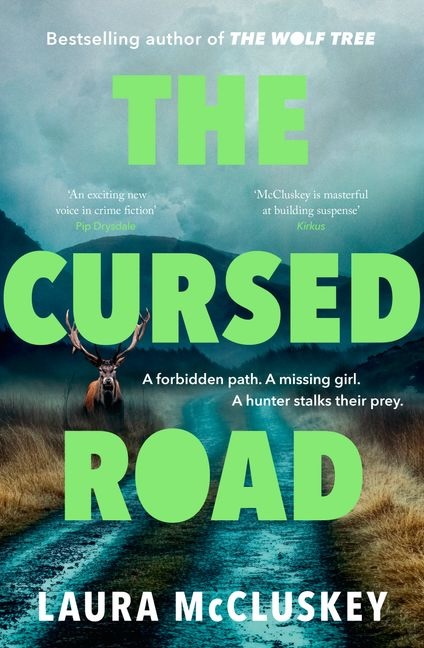
Book Review: The Twins by L V Matthews – a twisty psychological thriller with dark family secrets

This novel is the sort of psychological thriller that has you hooked from the beginning. Yes, it’s about twins, and I know there have been so many stories about twins, you often feel you’ve heard them all before. But that didn’t stop me picking this one up and getting immersed in the story of Margot and Cora.

For twins, the two couldn’t be more different. Margot is quiet and responsible, a dedicated nanny to a well-to-do London family. She has a comfortable life and makes sure everything is as it should be for her young charges. It’s a twenty-four seven kind of gig, but you get the feeling Margot is creating a warm and loving environment because that seems to have been absent in her own childhood.

Cora on the other hand lives in a cramped flat across town with a flatmate, and the two are complete hedonists, living on the edge, while Cora will stop at nothing to get that big break as dancer. She’s confident, a bit crass, breezy and somewhat heartless. Glimpses of her at school, a decade before, reveal she’d been in with the in-crowd, while Margot lingered in the background, friendless and the butt of jokes.

The Twins begins with a mishap during a family holiday on a yacht which sees Margot lose the medication that keeps her anxiety at bay, and slowly memories start to creep back. These are events from her late teens, when something terrible happened involving the death of the twins’ younger sister Annie. Desperate to know more, Margot toys with the idea of seeing a therapist, an idea that Cora vehemently opposes. What is the secret that Cora wants to keep from Margot?

The story flips between the two sisters as we watch Margot attempt to reclaim the past, questioning her grandmother, in a care-home, her own memory now patchy. She trawls the internet to find the one person who might help her – Cora’s high-school boyfriend and Margot’s secret crush. Meanwhile Cora trains for a role in a dance performance that echoes parts of their story.

As more and more shadowy secrets rise to the forefront of Margot’s mind, you can’t help but feel for her and worry that when she finds out the truth it will be worse than not-knowing. She’s a much more sympathetic character than Cora, who seems like the dark to Margot’s light. Besides which, Margot’s grip on her life seems more and more rickety. This really racks up the tension.

Altogether, this is a nicely escapist read that keeps you hooked. However there was one point at which I wanted to throw the book across the room – a twist that I wasn’t expecting, not at all. I wasn’t even sure I wanted to finish the book after that. But I’m glad I did. It all comes together quite well and it makes the book seem rather more psychologically interesting than it might have been.

So if you like a good twisty, suspenseful read, this one’s worth persevering with, even if it is about twins. There is a really nasty character who makes a good villain; and the story plays with the fickleness of memory and the effects of trauma to create an interesting psychological situation. The plot really keeps you on your toes as a reader, so The Twins definitely does the job. A four-star read from me.

Book Review: The Last Line by Stephen Ronson – a World War Two thriller with a home-front hero who’ll stop at nothing

I’m not really sure what to make of The Last Line, Stephen Ronson’s first book in a series following wartime hero John Cook. The cover promises that Cook is “the Jack Reacher of 1940s Britain”, and that would certainly seem to be true. But it took me a while to get used to a character like Cook in a WWII Suffolk setting.

After serving in the First World War, Cook had decided he wanted more action, and found it as a Commando in India. Once he got that out of his system, he got busy turning around a struggling family farm and buying up more land. When we meet him, Cook is just quietly minding his farm when a Spitfire crash lands in one of his fields, chased by a Messerschmitt, an interesting scene that reminds us that the war is dangerously close to British soil.

As a farmer, Cook needn’t rejoin his regiment, but you can’t keep a good man down and he plans to get back into the action as soon as possible. But the War Office has other ideas for him, and he’s instead asked to be part of an Auxiliary Unit, a resistance group designed to make things difficult for a German invasion, which after the fall of France now seems imminent. He meets a man named Bunny in a pub who tells him to find some people he can trust to lend helping hand, people who are prepared to give their lives in a ‘last line’ of defence, before the tanks roll their way on up to London.

And so we get to meet a few other determined sorts, among them young Eric, out poaching every night, Cyril with his hidden radio gear, and Lady Margaret who is struggling to save her estate from ruin, but has a stash of munitions ready to go. There’s some instant chemistry between LM and Cook, but before any romance can take place, our dashing hero has some local battles on his hands. The daughter of his accountant has been murdered – she’d been worried about a young evacuee and had been asking awkward questions.

These lead Cook to The Grange, a stately home also struggling to pay the bills, where he spots odd comings and goings involving trucks, a couple of young spivs who aren’t dressed for the country, and a padlocked barn. He puts his Commando knowledge to good use, how to make himself invisible as well as how to get answers out of people who think a sidearm makes them tough. They’re always in for a surprise as Cook will stop at nothing and knows how to kill with his bare hands.

It’s fair to say, however, that the malefactors are truely vile and get what they deserve. But as the death toll rose, I just couldn’t help wondering how Cook could get away with it all. Perhaps Bunny would pull a few strings. In the end I decided to just go with it and enjoy the story as a kind of boy’s own adventure for grown-ups.

The support characters are interesting and offer scope for development in the novels to come. I liked Lady Margaret, she’s not afraid to get her hands dirty, and the young evacuee, Frankie. He’s struggling to fit in, has obviously come from poverty, but Cook takes him on in an endearing way. I hope we get more from Mrs Cook, John’s mother, who seems a salt of the earth type, and has a lot to put up with.

The Last Line is a diverting read, with plenty of pace and a lively style that suits the period and the main character. The second book is already published (The Berlin Agent), and I’m interested enough in Cook & co. to find out what happens next. This one’s a three-star read from me.

Book Review: The Family Remains by Lisa Jewell – a twisty, psychological thriller sequel that will have you hooked

The sequel, The Family Remains picks up the story of the younger generation, having been reunited in the first book and who are now trying to each build a future. This includes Libby Jones, the daughter Lucy had as a teenager, brought up by adoptive parents and who inherited the house in Chelsea. But the shadows of what went before still linger and there’s a sense that Henry and Lucy in particular are still looking over their shoulders.

When a bag of bones is found by mudlarkers on the riverbank, DI Samuel Owusu traces them back to the old Lamb residence and all the things that Henry and Lucy hoped would be forgotten about forever may now come to light. But Henry and then Lucy are on a quest to find Phin, Libby’s father, supposedly working in a safari park in Botswana, but who has high-tailed it, for some reason, to Chicago.

So while Henry and Lucy are hunting down Phin, DI Owusu is trying to piece together the life of Birdie Dunlop-Evers, a former member of a pop-group, reported missing in the 1990s. The story also works in the story of Rachel, a jewellery designer, who is told at the start of the book of the death of her estranged husband. We’re well aware of the particularly nasty type of guy Michael was – we met him in the earlier book when he was married to Lucy.

Golly, there’s a lot going on here, so never before was there a better reason to read the earlier book before the sequel. But somehow it all makes sense, and even if it’s a while since you read The Family Upstairs, you never feel completely bamboozled. Yes, you will have questions, loose ends and half-forgotten pieces of the overall puzzle. But Lisa Jewell will have you hooked, never the less, as I was.

I steamed through this novel in a couple of days, desperate to know if things would work out all right in the end. There’s always the sense that even though Henry and Lucy and even perhaps Phin, have been driven to do desperate and even quite bad things, they were very damaged children. We still feel for them, as well as Rachel, getting caught up in a relationship with a monster. It’s a twisty, original psychological thriller and as such a compelling read, but it’s very empathetic too.

And the characters are just so interesting. DI Owusu is a really nice guy, thoughtful, intelligent and sympathetic, which helps balance out the potential darkness and selfishness of Henry. Rachel’s story takes us into a character who has lived for the moment when it comes to relationships and suddenly in her thirties, feels it’s time to make a commitment. If only she hadn’t settled on Michael. But it’s Lucy I really enjoyed the most – she is so fragile on the one hand and yet has had to be strong and think on her feet for her children.

It is probably the characters and their unique situation that prompted so much demand from readers for the sequel that Lisa Jewell hadn’t planned to write. Which is probably why her books are so good, so moreish. Whenever I feel like a book to unwind with, she’s a top choice. If only I could make them last a day or two longer. This one’s a four-star read from me.